info@gdaddtech.cn
+86-18566873215



A complete glass workshop is not built around a single machine. It is defined by how multiple processes connect, how material flows from raw sheet to finished product, and how each step maintains quality without slowing production. In modern factories, a well-planned glass processing line determines output efficiency, defect rate, and delivery reliability.
Industry data shows that most flat glass must go through at least three to five secondary processes before reaching final application, including cutting, edging, drilling, washing, and tempering. Each stage requires specialized equipment, and missing or mismatched machines can disrupt the entire workflow.
Before selecting equipment, it is important to understand the standard process sequence. A typical line includes glass loading, cutting, edge processing, hole drilling if required, cleaning, and further treatments such as tempering or laminating.
This sequence forms the foundation of a full glass production system, where each machine must operate in coordination with the next step. Production planning should therefore focus on flow continuity rather than isolated equipment performance.
The first essential equipment in any line is the cutting system. Raw glass sheets are large and must be precisely cut into required sizes before further processing.
Modern cutting machines use CNC control to ensure accurate dimensions and reduce material waste. Automated loading and breaking systems improve efficiency and reduce manual handling risks.
Without a stable cutting stage, downstream processes cannot maintain consistency, making this step a critical part of any factory machine setup.
After cutting, glass edges are sharp and uneven. Edge processing machines are used to smooth and shape the edges to meet safety and aesthetic requirements.
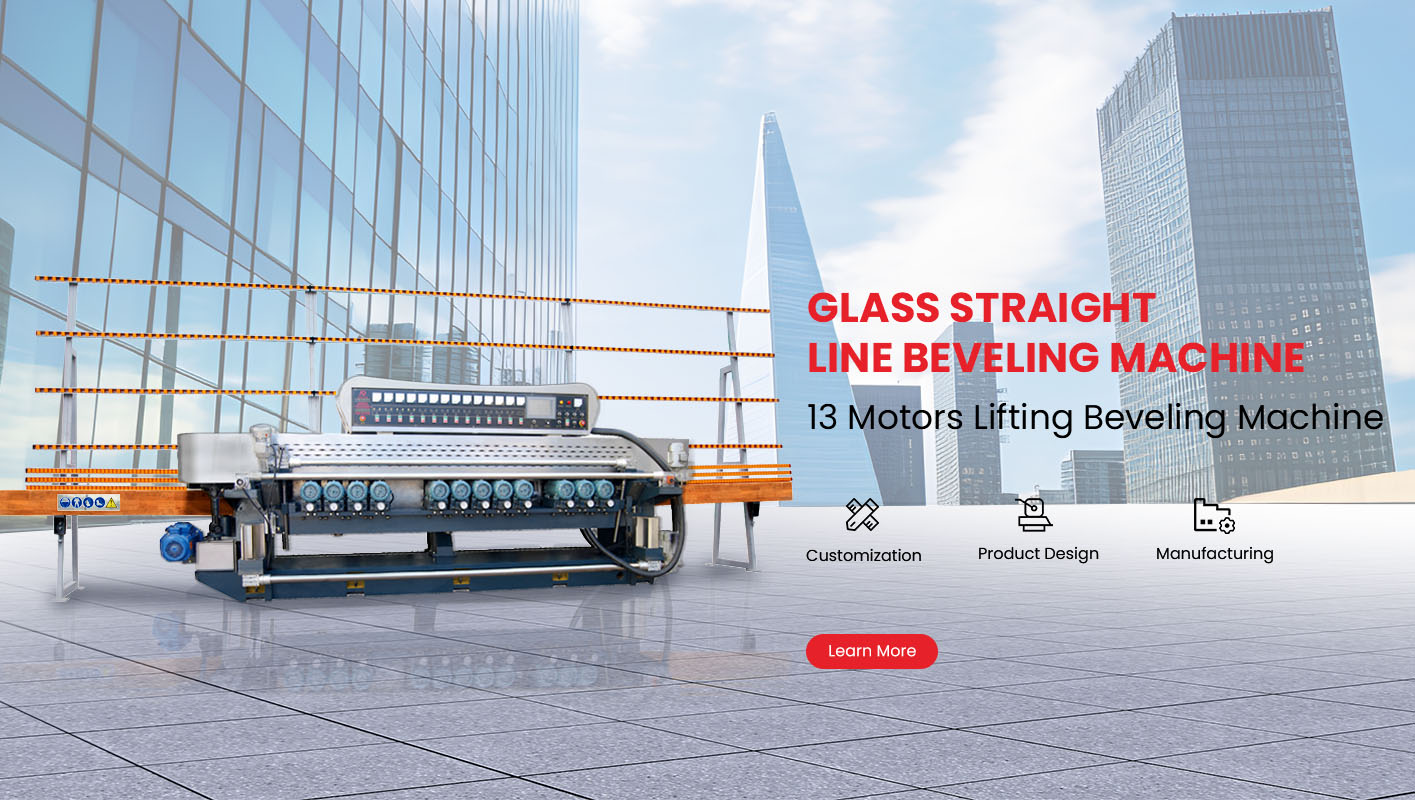
These machines include straight-line edging machines, beveling machines, and double-edging systems. They not only improve appearance but also reduce stress concentration at the edges, which is important for further processing such as tempering.
Edge quality directly affects product strength, making this stage a key component of glass processing line machines.
Many glass products require holes for installation, fittings, or functional components. Drilling machines create precise holes with controlled positioning and clean edges.
In automated lines, drilling equipment is often integrated with conveyors to maintain continuous production. Proper drilling ensures compatibility with hardware and prevents cracking during later processes.
This stage is especially important for architectural glass, bathroom glass, and appliance panels.
Cleaning is a necessary step before any advanced processing such as coating, printing, laminating, or insulating assembly. Washing machines remove dust, oil, and debris generated during earlier stages.
A high-quality washer ensures that glass surfaces are clean and dry, preventing defects in downstream processes. Poor cleaning can lead to bonding failure, surface contamination, or visual imperfections.
For this reason, washing equipment is considered one of the most critical units within modern glass manufacturing equipment systems.
For applications requiring strength and safety, glass is often tempered after processing. Tempering furnaces heat the glass to high temperatures and then rapidly cool it to increase its mechanical strength.
Tempered glass is widely used in construction, furniture, and automotive applications. The quality of tempering depends heavily on the accuracy of previous steps such as cutting and edging.
This stage transforms standard glass into a safety product suitable for demanding environments.
In addition to tempering, some production lines include lamination or insulating processes. Laminating machines bond multiple layers of glass with interlayers to improve safety and performance.
Insulating glass lines assemble multiple glass panels with spacers and sealants to enhance thermal and acoustic insulation. These systems are commonly used in energy-efficient building applications.
Both processes require precise alignment, clean surfaces, and controlled conditions, highlighting the importance of upstream equipment coordination.
Beyond processing machines, handling equipment plays a crucial role in maintaining workflow efficiency. This includes conveyors, transfer tables, loading arms, and sorting systems.
Automation reduces manual labor, improves safety, and ensures consistent movement between stages. In high-capacity factories, automated handling is essential for maintaining production speed and minimizing damage.
Below is a simplified overview of a typical glass processing setup:
| Process stage | Equipment | Function |
|---|---|---|
| Loading | Glass loader | Transfers raw sheets into the line |
| Cutting | CNC cutting machine | Cuts glass to required size |
| Edge processing | Edging machine | Smooths and shapes edges |
| Drilling | Glass Drilling Machine | Creates holes for fittings |
| Cleaning | Glass Washing Machine | Removes contaminants |
| Heat treatment | Tempering furnace | Strengthens glass |
| Finishing | Laminating or IG line | Adds safety or insulation properties |
This structure represents a common configuration, but actual setups may vary depending on product type and production scale.
ADDTECH focuses on providing coordinated solutions across multiple stages of glass processing. Instead of offering standalone machines only, the company develops equipment that can be integrated into complete production lines.
Its range covers key processes such as edging, drilling, and washing, allowing manufacturers to build efficient and stable systems. This integrated approach helps reduce compatibility issues and improves overall workflow efficiency.
A glass processing line is a system where every machine contributes to final product quality and production efficiency. Selecting the right combination of equipment requires understanding both individual processes and their interaction within the full workflow.
When machines are properly matched and integrated, manufacturers can achieve stable output, consistent quality, and optimized production performance across a wide range of applications.