info@gdaddtech.cn
+86-18566873215



In glass and metal fabrication, edging and beveling are two essential finishing processes that improve product safety, precision, and aesthetics. Though they both modify the edge of a material, they serve different purposes and are achieved using distinct equipment and techniques. Understanding their differences helps manufacturers select the right process for their production needs and achieve optimal results.
Edging refers to the process of smoothing and shaping the sharp or rough edges of a glass or metal piece after cutting. The goal is to make the edges safe to handle, dimensionally accurate, and visually clean. In glass processing, edging typically uses straight-line edging machines or CNC edge grinders to achieve various edge profiles such as flat, pencil, arris, or round.
| Edge Type | Description | Typical Use |
|---|---|---|
| Flat Edge | Straight, polished edge at 90° | Mirrors, furniture glass |
| Pencil Edge | Rounded edge with smooth curvature | Table tops, shelves |
| Arris Edge | Slightly chamfered edge at 45° | Architectural glass, safety glass |
| OG Edge | Decorative, curved profile | Decorative panels and furniture |
Purpose of edging:
Remove sharpness for safe handling.
Prepare the glass for tempering or lamination.
Improve dimensional accuracy and visual appeal.
Prevent micro-cracks and edge failure during installation.
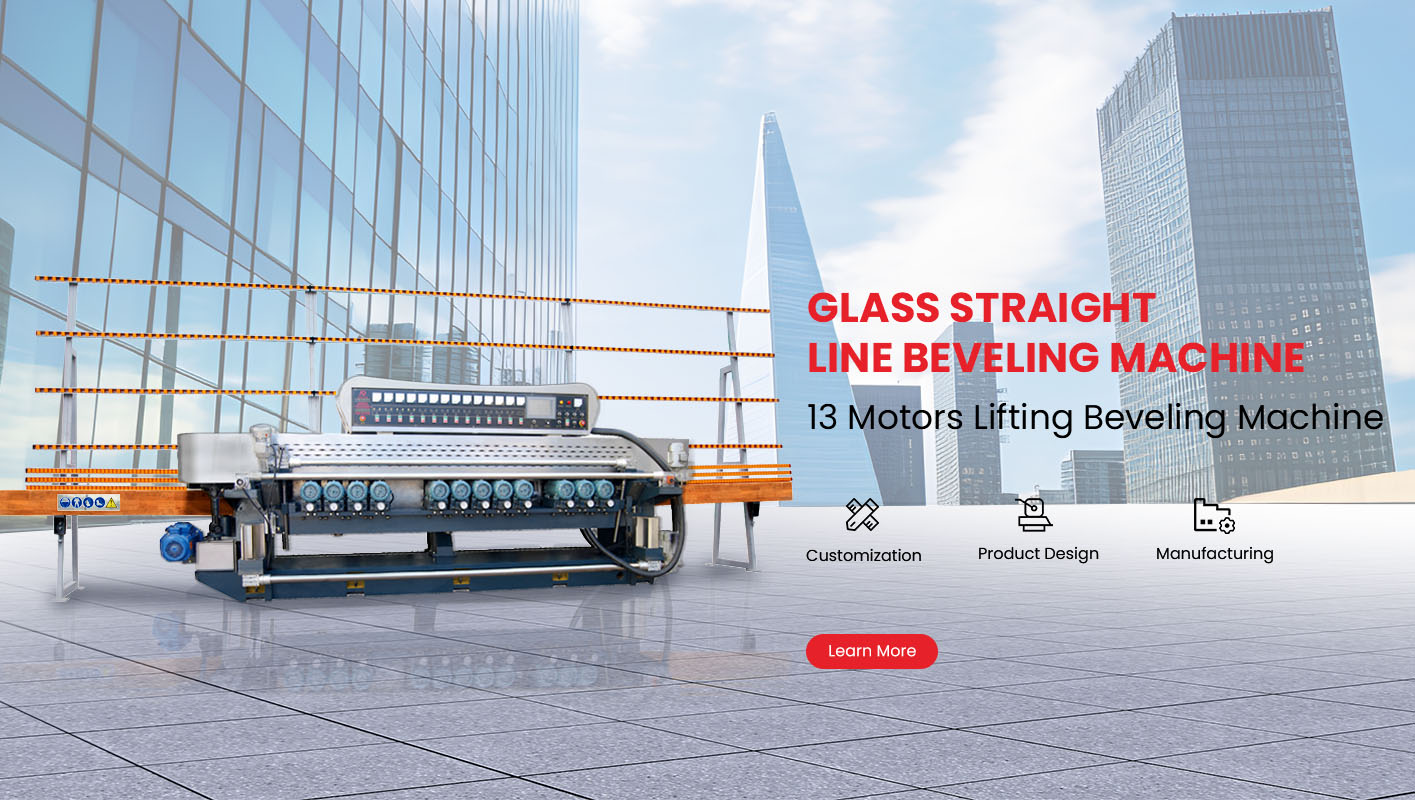
Beveling is a specialized form of edge treatment that cuts the edge at an angle other than 90°, usually between 10° and 45°. It creates a sloped or angled surface, giving the glass or metal a more elegant, refractive look. Beveling is often performed using beveling machines equipped with multiple grinding and polishing wheels that gradually shape the angled surface.
| Angle | Bevel Width | Common Application |
|---|---|---|
| 10°–15° | 5–8 mm | Light decorative panels |
| 20°–25° | 10–15 mm | Mirrors, tabletops |
| 30°–45° | 15–40 mm | Architectural and high-end decorative glass |
Purpose of beveling:
Create decorative light-reflecting effects.
Enhance the perceived depth and brilliance of glass edges.
Prepare edges for aesthetic framing or design emphasis.
Increase the value and sophistication of the finished product.
| Feature | Edging | Beveling |
|---|---|---|
| Cutting Angle | 90° (straight edge) | Angled (10°–45°) |
| Main Goal | Safety, accuracy, and smoothness | Decoration and visual enhancement |
| Equipment Used | Edge grinding machine, CNC grinder | Beveling machine with multiple heads |
| Material Removal | Minimal — only sharpness and irregularities | Greater — creates a visible angled face |
| Surface Finish | Flat or rounded | Sloped and polished |
| Applications | Functional and safety-oriented | Decorative and aesthetic |
| Processing Speed | Fast | Slower, more precise |
| Cost | Lower | Higher due to multiple polishing stages |
Focuses on structural integrity and safety. The primary goal is to eliminate sharp edges that can cause breakage or injury.
Supports downstream processing. Properly edged glass can be tempered, laminated, or drilled without risk of cracks.
Common in mass production. Used for windows, partitions, and shelves where precision and efficiency matter most.
Focuses on visual design. The angled edge creates a prism-like effect that refracts light and adds depth.
Involves multiple grinding and polishing steps. Each step refines the bevel angle and surface clarity.
Common in decorative and luxury applications. Mirrors, framed glass, and display panels often use beveling for visual enhancement.
Beveled glass captures and refracts light at its angled edge, producing subtle rainbow-like reflections and adding elegance to interiors. In contrast, edged glass maintains a clean, simple finish suited for modern minimalist designs.
Edged Glass: Functional and sleek. Ideal for architecture, shower enclosures, and frameless designs.
Beveled Glass: Artistic and refined. Preferred for mirrors, doors, and decorative furniture.
Typically use diamond grinding wheels and polishing belts.
Can process multiple edges simultaneously with straight-line or CNC systems.
Support adjustable edge profiles for batch production.
Employ multi-wheel configurations (rough grinding, fine grinding, polishing).
Allow precise control of bevel angle and width.
May include automatic feed systems and digital calibration for accuracy.
Both machine types benefit from water cooling, abrasive management, and servo-controlled motion, ensuring consistent edge quality and long tool life.
| Industry | Edging Use | Beveling Use |
|---|---|---|
| Architecture | Curtain walls, windows, partitions | Decorative façades and interior panels |
| Furniture | Tabletops, shelves | Mirrors, decorative glass |
| Automotive | Windshields, windows | Limited (mostly edge rounding) |
| Interior Design | Frameless doors and dividers | Art glass, wall décor |
| Construction | Safety glass | Entrance doors, skylights |
When deciding which process to use, consider:
Functionality: For structural and safety requirements, edging is sufficient.
Aesthetics: For visual enhancement or luxury design, beveling is ideal.
Budget and Time: Edging is faster and more economical, while beveling adds cost but elevates appearance.
Application: Match the finish to the intended use — functional or decorative.
ADDTECH is a professional manufacturer specializing in glass processing equipment, including straight-line edging machines, multi-head beveling systems, and CNC edge-grinding centers. Their machines are designed for precision, durability, and energy efficiency, serving the architectural, furniture, and decorative glass industries worldwide.
ADDTECH provides:
Stable mechanical structures for vibration-free processing.
Intelligent control systems with digital angle adjustment.
Custom solutions for different glass thicknesses and shapes.
Comprehensive training and after-sales support.
Whether your goal is high-speed edging for production lines or fine bevel polishing for decorative projects, ADDTECH offers the right solution to improve productivity and finish quality.
In summary, edging refines the glass edge for safety and precision, while beveling enhances it for visual appeal and depth. Both processes complement each other in modern glass manufacturing. For companies aiming to achieve superior edge quality and reliable performance, partnering with ADDTECH ensures access to advanced machinery that meets both functional and aesthetic standards.