info@gdaddtech.cn
+86-18566873215



Glass grinding machines play a crucial role in modern glass processing, helping manufacturers achieve smooth, precise, and safe edges for architectural, automotive, and industrial glass products. These machines not only enhance the appearance of glass panels but also improve their performance and structural reliability. Understanding their benefits reveals why they are essential in every professional glass fabrication line.
One of the most significant advantages of glass grinding machines is their ability to create uniform and smooth edges. After cutting, glass sheets typically have sharp, uneven edges that pose safety risks and can easily crack. Grinding machines use diamond-bonded wheels to remove imperfections and round the edges precisely, resulting in clean finishes that prevent chipping and enhance product appearance.
Improved safety: Rounded or polished edges reduce handling hazards.
Consistent quality: Automated control ensures each panel meets strict dimensional accuracy.
Enhanced appearance: Smooth edges contribute to the visual refinement of architectural and decorative glass.
Modern glass grinding machines are designed for continuous operation, supporting high-speed grinding and polishing. By automating feed and pressure adjustments, they minimize manual intervention and shorten processing cycles.
Increased throughput: Capable of handling multiple sheets per hour with consistent output.
Reduced labor demand: Automatic positioning and edge detection systems save operator time.
Stable precision: Servo-driven control maintains consistent grinding depth throughout long shifts.
This efficiency directly translates into lower production costs and faster delivery times—a key competitive edge for glass manufacturers.
Edge finishing is not just cosmetic; it affects the mechanical strength of glass. Rough or uneven edges act as stress concentrators, which can lead to cracks under load or thermal shock. By smoothing these imperfections, grinding machines significantly increase the structural resilience of the final product.
| Process | Resulting Strength | Typical Use |
|---|---|---|
| Unground edges | Low impact & thermal resistance | Temporary glass or internal partitions |
| Ground edges | 2–3× higher edge durability | Windows, facades, shower enclosures |
| Polished edges | Maximum optical & mechanical stability | Furniture, display panels, and electronics |
Through precise edge conditioning, manufacturers ensure glass panels withstand both physical and environmental stress.
Glass grinding machines can process a wide range of materials—from float glass and tempered glass to laminated and patterned panels. By adjusting wheel speed, pressure, and coolant flow, the same equipment adapts to different hardness levels and thicknesses.
Suitable for thicknesses from 3 mm to 25 mm.
Handles straight edges, round edges, bevels, and arrises.
Compatible with coatings, tints, and laminated safety films.
This versatility makes grinding machines indispensable across industries such as architecture, interior design, automotive manufacturing, and electronics assembly.
In applications where glass must be joined with metal or plastic frames, smooth and accurate edges improve the bonding surface quality. Uniformly ground edges enhance adhesive contact and ensure a tight fit with minimal gaps, critical for sealed window systems or display enclosures.
Better sealing performance: Prevents leaks and dust intrusion.
Higher dimensional accuracy: Ensures reliable fit in automated assembly lines.
Reduced rejection rate: Lowers the likelihood of rework due to misalignment.
Modern glass grinding machines incorporate multiple safety systems—automatic coolant flow, debris collection, and enclosed cutting chambers. These features protect workers from glass dust and fragments while maintaining visibility through transparent protective panels.
Automatic water lubrication: Cools both the wheel and glass, preventing cracks.
Built-in filtration: Keeps the work area clean and extends coolant life.
Smart control panels: Allow intuitive operation with digital parameter adjustment.
These innovations make the machines suitable even for medium-sized workshops without sacrificing industrial-grade safety standards.
Contemporary models integrate frequency-controlled motors and optimized coolant recycling systems, reducing power and water consumption. By balancing torque and speed automatically, they achieve efficient grinding with minimal waste.
Energy savings up to 25% compared with traditional grinders.
Extended tool lifespan thanks to adaptive pressure control.
Lower maintenance cost with modular component design.
For companies aiming to improve sustainability while maintaining profitability, such machines offer a clear operational advantage.
Automated glass grinding systems ensure repeatable precision, which is essential for mass production environments. Whether producing hundreds of identical panels or custom-shaped glass components, CNC-controlled models maintain tolerances within fractions of a millimeter.
Ideal for large-scale architectural glazing production.
Supports custom edge profiles for decorative or technical glass.
Integrates seamlessly with cutting, washing, and tempering lines.
By minimizing variation, manufacturers can meet international quality standards and strengthen their export competitiveness.
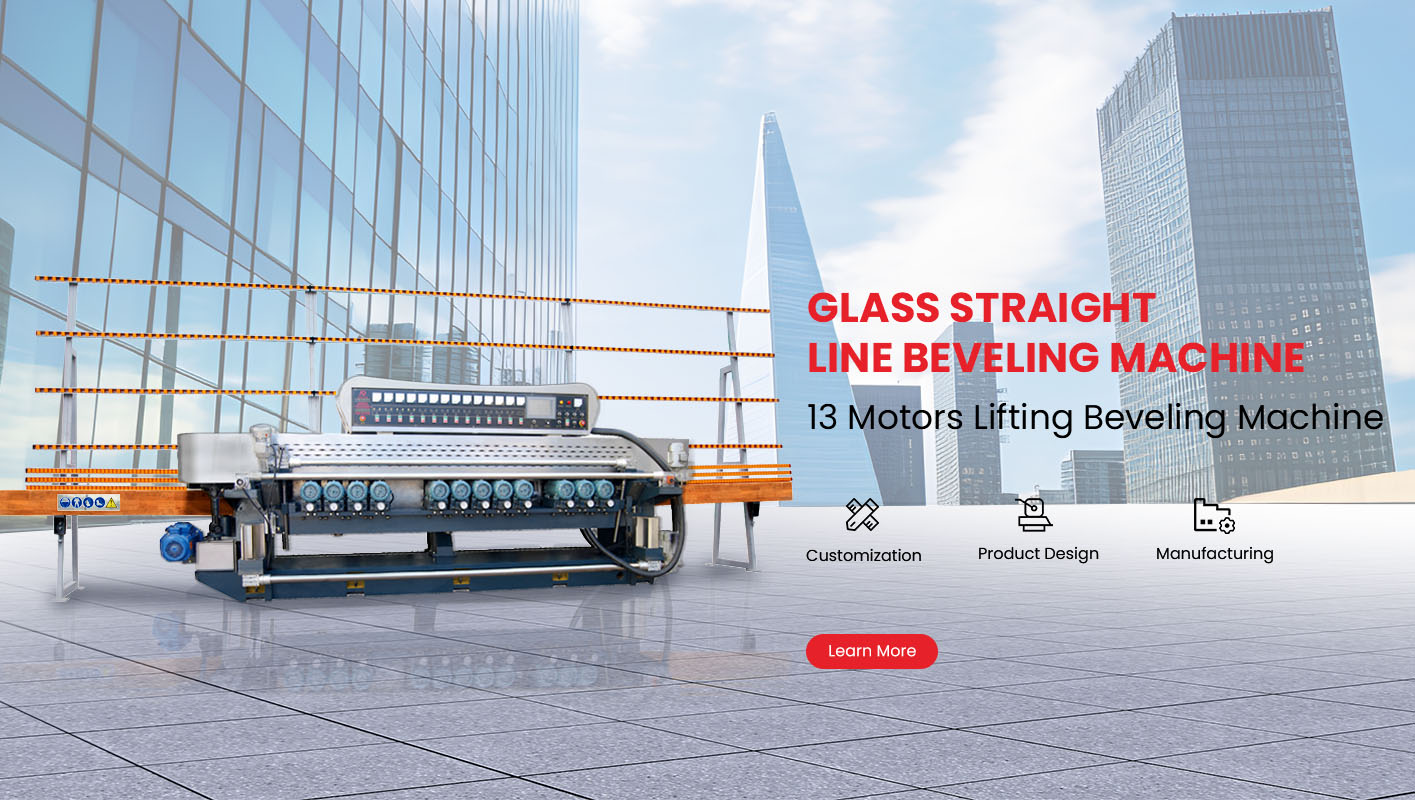
ADDTECH is a professional manufacturer specializing in glass grinding, beveling, and cutting machinery. Their advanced equipment combines precision engineering, intelligent control systems, and durable construction, serving glass processors worldwide.
ADDTECH’s solutions are designed for high stability, long service life, and easy maintenance, helping customers achieve superior surface quality and production efficiency. Whether for small workshops or automated production lines, ADDTECH provides comprehensive support, including installation, training, and after-sales service.
Investing in a high-quality glass grinding machine offers long-term benefits:
Lower defect rates and higher yield.
Consistent surface finish meeting export-grade requirements.
Reduced manual polishing and inspection workload.
Greater return on equipment investment through multi-year reliability.
With regular maintenance and proper wheel replacement, the machine can operate efficiently for years, contributing to sustainable and profitable glass manufacturing.
Glass grinding machines combine precision, safety, and efficiency to produce flawless edges and structurally stronger glass products. From architectural facades to fine furniture, their contribution to product quality is irreplaceable. For companies seeking advanced, reliable, and customizable glass processing solutions, ADDTECH stands out as a professional manufacturer delivering innovation and durability for the global glass industry.