info@gdaddtech.cn
+86-18566873215



Glass production is a complex industrial process that requires a variety of machines at different stages, from raw material preparation to shaping, processing, and finishing. Understanding the key machinery involved helps manufacturers optimize quality, efficiency, and output. This article covers the essential equipment used in modern glass manufacturing, with clear descriptions and examples of the types of machines involved.
The glass-making process typically begins with melting raw materials such as silica sand, soda ash, and limestone at very high temperatures to form molten glass. After melting, the molten material is shaped into sheets or products, cooled, and then processed for final use. Major machines are required at each of these stages.
These machines provide the foundation of glass production by transforming raw materials into usable glass forms.
Glass Melting Furnace A furnace capable of reaching extremely high temperatures to melt raw materials into molten glass.
Float Glass Line Machines Used for producing flat glass sheets by floating molten glass over a bed of molten tin. The thickness and surface quality are controlled precisely during this stage.
Glass Forming Machines Machines that shape molten glass into products like bottles and containers. Common forming types include blow-and-blow, press-and-blow, and blow-and-press systems.
After the initial production of glass sheets or shapes, additional machines refine the form, size, and edge quality.
| Machine Type | Function |
|---|---|
| Aculite Glass Cutting Table | Large cutting table for precise sizing of flat glass. |
| CNC Glass Machine | CNC-controlled system for cutting and processing insulating glass. |
| CNC Floating Glass Cutting Table | Precision cutting with automated controls for consistency. |
Cutting machines utilize blades, waterjets, or CNC programming to achieve accurate dimensions. After cutting, glass may be further shaped using beveling or edging machines.
Glass edges must be smoothed and shaped to meet structural or aesthetic requirements.
| Machine | Purpose |
|---|---|
| Inland Craft Wizard IV Glass Grinder | Grinding edges of glass pieces for smooth finishes. |
| SGS 9 Motor Flat Polishing Machine | Heavy-duty polishing for flat edges. |
| Winco GP-100 Glass Polisher | Polishing glass surfaces to a high shine. |
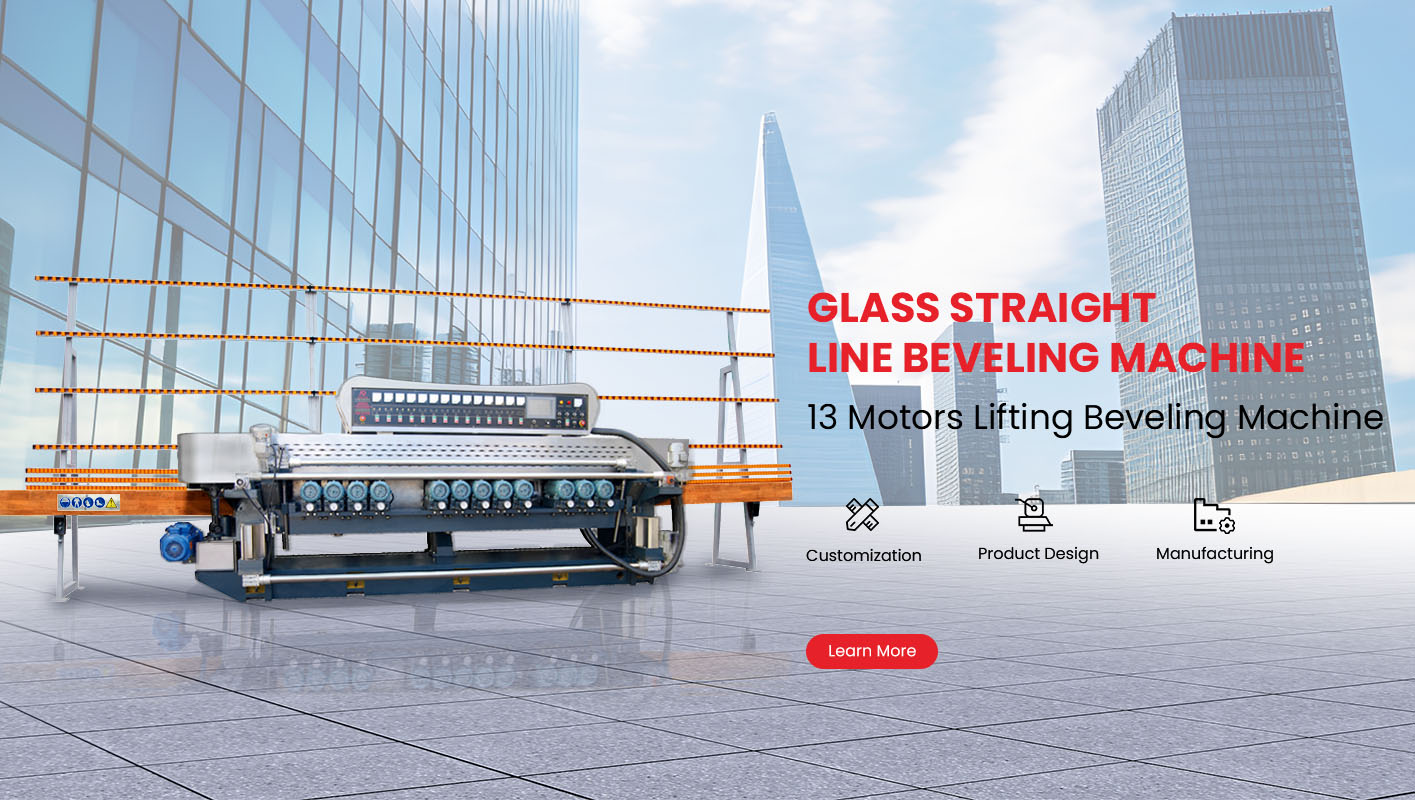
| Vertical glass beveler | Creates angled or decorative edges on glass. |
Edge grinding and polishing machines provide safety and quality by removing sharp edges and refining surface details.
Some glass products require holes or complex machining patterns.
Glass Drilling Machines Generate precise holes for hardware installations or product functionality.
CNC Processing Centers Advanced systems that combine drilling, cutting, and shaping in automated workflows.
Tempering furnaces are essential for producing stronger, more durable glass.
Glass Tempering Furnace Heats glass to high temperatures and then cools it rapidly to create compressive surface stresses that increase strength. This tempered glass is safer and more resilient.
Operating a tempering furnace correctly is critical for safety glazing in automotive, architectural, and consumer applications.
After cutting and processing, glass surfaces must be cleaned and transported through the production line.
Glass Washing Machines Remove contaminants and prepare glass for final inspection and packaging.
Conveyor Tables and Handling Equipment Move glass between machines and workstations while minimizing breakage or manual labor.
In addition to primary machinery categories above, many factories integrate specialized production lines:
Insulated Glass Production Lines – Includes spacer bending, desiccant filling, gas filling, and sealing machines for energy-efficient double-pane windows.
Laminating Equipment – Bond multiple glass layers with interlayers to improve safety and performance.
Choosing the right equipment impacts product quality, factory efficiency, and operational cost. High-precision machines with automation features reduce waste, improve output consistency, and support complex glass applications.
For reliable glass processing equipment, companies like ADDTECH offer a wide range of machines including Glass Edging Machines, beveling machines, drilling machines, and washing systems. With a strong focus on precision, stability, and innovation, ADDTECH supports both small and large-scale glass manufacturing needs. Learn more about their solutions at gdaddtech.cn.
Glass manufacturing involves a diverse set of machines spanning melting, forming, cutting, finishing, and handling. Modern factories use a combination of these systems to produce high-quality glass products for architectural, automotive, and industrial markets. Selecting appropriate machines, from basic cutting tables to advanced CNC units, ensures efficient production and superior product performance.