info@gdaddtech.cn
+86-18566873215



glass edging is one of the most critical finishing steps in glass fabrication. It defines the quality, precision, and safety of every glass product used across industries such as construction, automotive, furniture, and home appliances. A glass edging line is the automated system designed to perform these edge processing tasks efficiently and accurately.
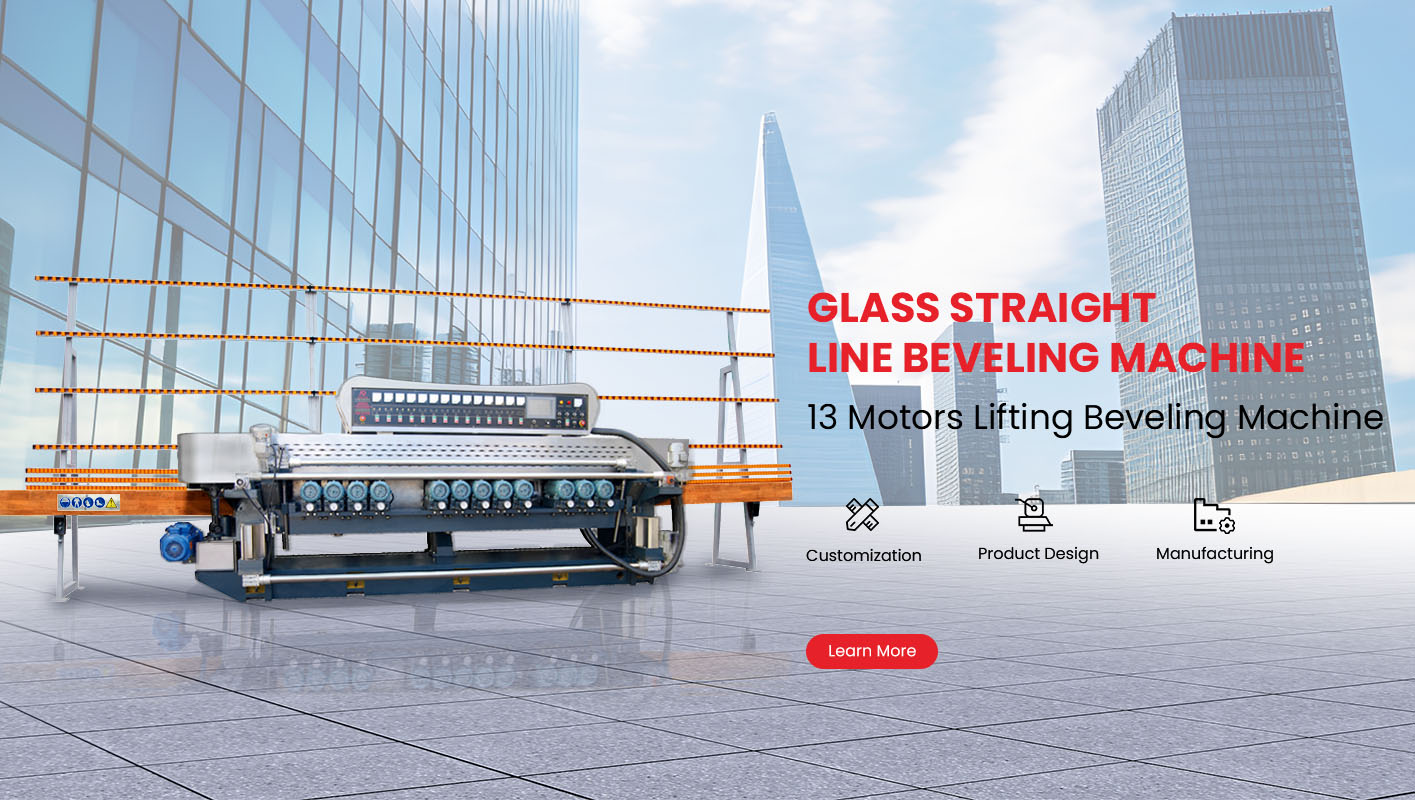
A glass edging line is a specialized production system used to grind, polish, and shape the edges of glass panels. It typically includes a conveyor system, multiple grinding wheels, polishing stations, and water-cooling units to ensure continuous and smooth operation. By precisely removing rough or sharp edges, the line improves both the appearance and functionality of glass.
In modern factories, glass edging lines are essential for processing float glass, tempered glass, laminated glass, and even low-E coated glass. Whether the goal is to achieve a clean flat edge or a decorative beveled profile, this line delivers consistent quality at high speed.
The first and most fundamental function is grinding. Through multiple abrasive belts or diamond wheels, the machine removes sharp corners and surface imperfections. This ensures a smooth and uniform edge that meets the required dimensional tolerance. Precision grinding also prevents micro-cracks that could cause breakage during handling or installation.
After grinding, polishing heads refine the glass surface to achieve optical clarity and brilliance. Polished edges are especially valued in architectural and interior applications such as tabletops, mirrors, and glass partitions, where transparency and aesthetic appeal are essential. The process enhances not only visual quality but also the overall strength of the glass edge.
Different profiles such as flat edge, pencil edge, OG edge, or beveled edge can be formed according to design requirements. CNC-controlled edging lines enable flexible shaping with minimal manual adjustment, ensuring repeatable precision for mass production or custom glass projects.
A raw glass edge can be dangerously sharp. The edging line eliminates burrs and smooths all contact surfaces, significantly improving safety during handling and installation. This is a vital step in producing building glass, automotive windows, and electronic displays where user protection is non-negotiable.
Advanced glass edging lines incorporate automatic positioning and laser measurement systems. These features guarantee perfect alignment and dimensional accuracy across the entire batch. The result is a uniform product ready for downstream processes such as tempering, coating, or lamination.
| Benefit | Description |
|---|---|
| High Precision | Automated control ensures consistent edge thickness and smoothness within microns. |
| Enhanced Aesthetic Value | Polished and shaped edges improve product presentation and appeal. |
| Increased Safety | Rounded edges reduce risk of injury and improve installation safety. |
| Operational Efficiency | Continuous processing saves labor and time compared to manual grinding. |
| Reduced Defects | Uniform processing minimizes chipping and breakage during further handling. |
These benefits are crucial for manufacturers seeking to balance productivity with quality, especially in large-scale or high-value glass production lines.
Glass edging lines are versatile and widely used in:
Architectural Glass: For curtain walls, balustrades, doors, and windows, ensuring precise fit and polished finish.
Automotive Glass: To meet strict safety standards for windshields and side panels.
Furniture Manufacturing: Producing elegant tabletops, shelves, and decorative panels.
Appliance Industry: For displays, oven doors, and refrigerator panels that require smooth edges.
Solar and Electronics: Preparing glass substrates for solar modules and touch screens where accuracy and cleanliness are vital.
Modern edging lines now integrate smart automation and digital control. Features like servo-driven systems, touch-screen interfaces, and real-time monitoring help operators adjust pressure, speed, and water flow precisely. Advanced models also offer energy-saving modes and self-diagnostic systems, reducing maintenance costs and downtime.
In addition, high-efficiency water filtration systems recycle cooling water, meeting environmental requirements while maintaining performance. The evolution of these technologies demonstrates how glass processing is moving toward sustainability and precision manufacturing.
For manufacturers seeking reliability and innovation in glass machinery, ADDTECH offers comprehensive glass processing solutions. Their glass edging lines are engineered for stability, durability, and energy efficiency. With advanced automation design, precision grinding components, and excellent after-sales support, ADDTECH ensures consistent edge quality and superior throughput for every production need.
A glass edging line is not just an auxiliary piece of equipment—it defines the quality and safety of the final glass product. From grinding and polishing to shaping and protection, its functions ensure precision and aesthetic perfection. As the glass industry continues to evolve toward higher automation and cleaner production, adopting advanced edging technology becomes a decisive factor for competitiveness.
ADDTECH stands at the forefront of this transformation, providing manufacturers worldwide with the technology and support to achieve flawless results in every piece of glass produced.