info@gdaddtech.cn
+86-18566873215



glass edging should improve safety, appearance, and downstream assembly quality. Yet in real production, breakage can appear exactly at the stage that is supposed to stabilize the panel. When factories review the root cause, they often find that the fracture did not start at the machine alone. It usually starts earlier, with hidden micro-cracks from cutting, poor edge allowance control, unstable support, wheel mismatch, coolant failure, or vibration that turns a small flaw into a full crack.
Pilkington notes that glass strength is highly sensitive to flaw distribution and that damaged edges take less stress than clean, well-finished edges. Recent engineering research on annealed glass edges also shows that manufacturing parameters and edge finishing quality directly affect edge strength and fracture performance.
For manufacturers, this matters far beyond scrap cost. Edge failure slows line speed, increases rework, raises labor time, and creates instability in delivery planning. In many workshops, the fastest way to reduce loss is not to push slower production across the board. It is to control the exact variables that cause the edge to weaken before final polishing.
Glass is brittle by nature. That means the edge becomes a critical stress zone once the sheet enters grinding. A small nick from loading, a poor score line from cutting, or a storage contact mark may stay invisible until the wheel begins removing material. At that point, stress concentrates at the defect tip and the crack grows quickly. This is why many teams believe the machine caused the failure, while the actual defect was already present before the first wheel touched the glass. Research from Missouri University of Science and Technology reported that one scored edge line was about 50 percent weaker than another edge line, and steel-cut glass showed about 25 percent less strength in that study.
That is also why many glass breakage issues, edge grinding defects are not solved by changing only one wheel or one operator. The full chain must be reviewed from cutting quality to transfer method to edging parameter setup.
A common question on the shop floor is why glass break during edging even when dimensions look correct. The usual causes fall into six categories.
Poor scoring pressure, breakout shock, stacked storage, or edge-to-edge collision leaves tiny defects. During grinding, these defects become crack origins. Even a strong line cannot fully compensate for damaged incoming glass.
When the edge allowance is too large, wheel load rises sharply. The wheel then pushes more aggressively into the edge, especially on thinner glass or long narrow panels. This raises the chance of chipping and corner loss.
A rough wheel that is too aggressive, a fine wheel that cannot remove prior damage, or a worn polishing wheel can all leave stress risers. Poor dressing also increases local point pressure and makes the result inconsistent across shifts.
Insufficient water flow causes heat buildup, friction marks, and local thermal stress. Dirty coolant also lowers grinding consistency. Pilkington’s technical guidance on glass stress notes that edge quality can directly influence breakage under stress conditions.
Misaligned rails, uneven pressure, poor clamping, or vibration during transfer can twist the sheet. Brittle material does not tolerate this well, especially when corners enter the first grinding position. A stable conveying system matters as much as spindle power.
Feed speed, pressure, wheel type, glass thickness, and desired finish must work together. If one variable is changed without rebalancing the others, edge quality drops fast. This is one reason a line may run well for one order and fail on the next.
Factories that want a better glass edging process usually manage four checkpoints at the same time: incoming glass quality, machine stability, consumable condition, and repeatable parameters.
| Control point | Typical risk | Practical action |
|---|---|---|
| Incoming cut quality | Hidden chips and score damage | Inspect first edge condition before loading |
| Edge allowance | Excess wheel pressure | Keep removal amount consistent by thickness |
| Wheel condition | Chipping, waves, poor finish | Dress and replace on schedule |
| Coolant flow | Heat, burn marks, crack growth | Maintain stable, clean water delivery |
| Conveyor stability | Vibration and twist stress | Check rails, clamps, bearings, alignment |
| Process recipe | Inconsistent finish by order | Standardize speed, pressure, and wheel sequence |
This is the foundation for any team searching for a reduce glass breakage machine solution. The best result comes from matching machine design with disciplined process control, not from relying on speed alone.
ADDTECH presents a strong fit for factories that need reliable glass processing machinery for edging, beveling, drilling, washing, and integrated line planning. According to its official company information, ADDTECH was founded in 2007 in Foshan, focuses on high-precision glass processing equipment, and highlights stability, easy maintenance, national high-tech company status, and EU CE certification. Its English site also states that the company serves many countries, supports multiple application series, and holds patented technology.
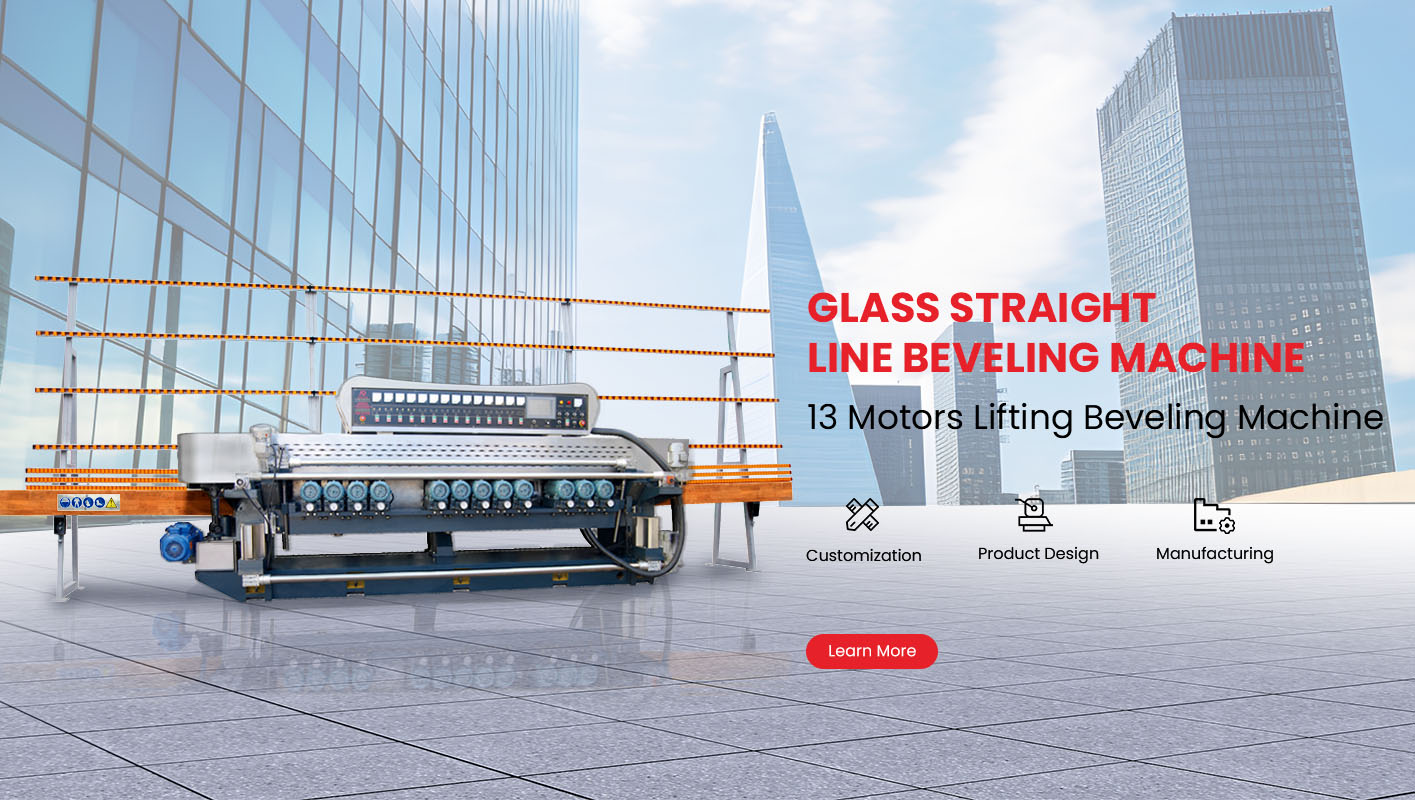
For edging operations specifically, ADDTECH states that its machines support automatic clamping and voltage stabilizing systems, while its company profile highlights an automatic oiling and lubrication system for the carriage to improve stability and maintainability. Its product range covers straight edge machines, bevel edge machines, 45 degree machines, pencil edging machines, drilling machines, washing machines, and line equipment, which is valuable for plants that want more consistent control from edging to cleaning.
That combination matters because breakage control is rarely solved by one isolated unit. A line performs better when support, transfer, grinding, polishing, and cleaning are planned as one connected process. For producers seeking a dependable glass edge polisher setup, equipment stability and maintenance access should be evaluated together with finished edge quality.
A good edging line does not simply remove material. It protects the value already created in cutting, drilling, coating, and final assembly. When glass breaks during edging, the visible loss is only the panel. The hidden loss includes labor, downtime, wheel wear, order risk, and customer confidence.
The most effective response is to audit the whole process in sequence. Check incoming edge quality first. Verify stock removal second. Inspect wheel condition and coolant flow third. Confirm conveyor stability and recipe consistency last. Once those factors are controlled, breakage usually falls and throughput becomes easier to predict.
ADDTECH’s equipment positioning around precision, stability, maintainability, and broader line integration gives manufacturers a practical base for lowering edging losses while keeping quality consistent across different glass sizes and applications. A clean edge is not just a visual result. It is a sign that the machine, the process, and the factory standard are working together.