info@gdaddtech.cn
+86-18566873215



In glass fabrication, the edge is never a minor detail. It affects safety, appearance, downstream tempering performance, installation fit, and the final value of the panel. That is why buyers often compare an edging machine and a beveling machine before expanding capacity or replacing older equipment. The short answer is simple: an edging machine mainly creates a flat, clean, finished edge, while a beveling machine creates an angled decorative edge with a wider visual face. The real decision, however, depends on the products you run, the finish standard you need, and how often your factory switches between orders.
ADDTECH positions itself as a manufacturer focused on high precision glass processing equipment, with stability and easy maintenance as core priorities. The company states that it was founded in 2007 in Shunde, Foshan, and highlights EU CE certification and national high-tech company status. Its product range includes edging, beveling, drilling, washing, 45 degree edging, special-shape processing, and complete line solutions, which makes its experience especially relevant when comparing these two machine types.
An edging machine is built for straight edge finishing. In practical production, it is used to remove sharpness, improve dimensional consistency, and produce a smooth, polished edge that is suitable for architectural glass, furniture glass, appliance panels, and many other standard flat-glass products. ADDTECH describes its straight-line edging models as machines that can complete rough grinding, fine grinding, chamfering, and polishing in one run.
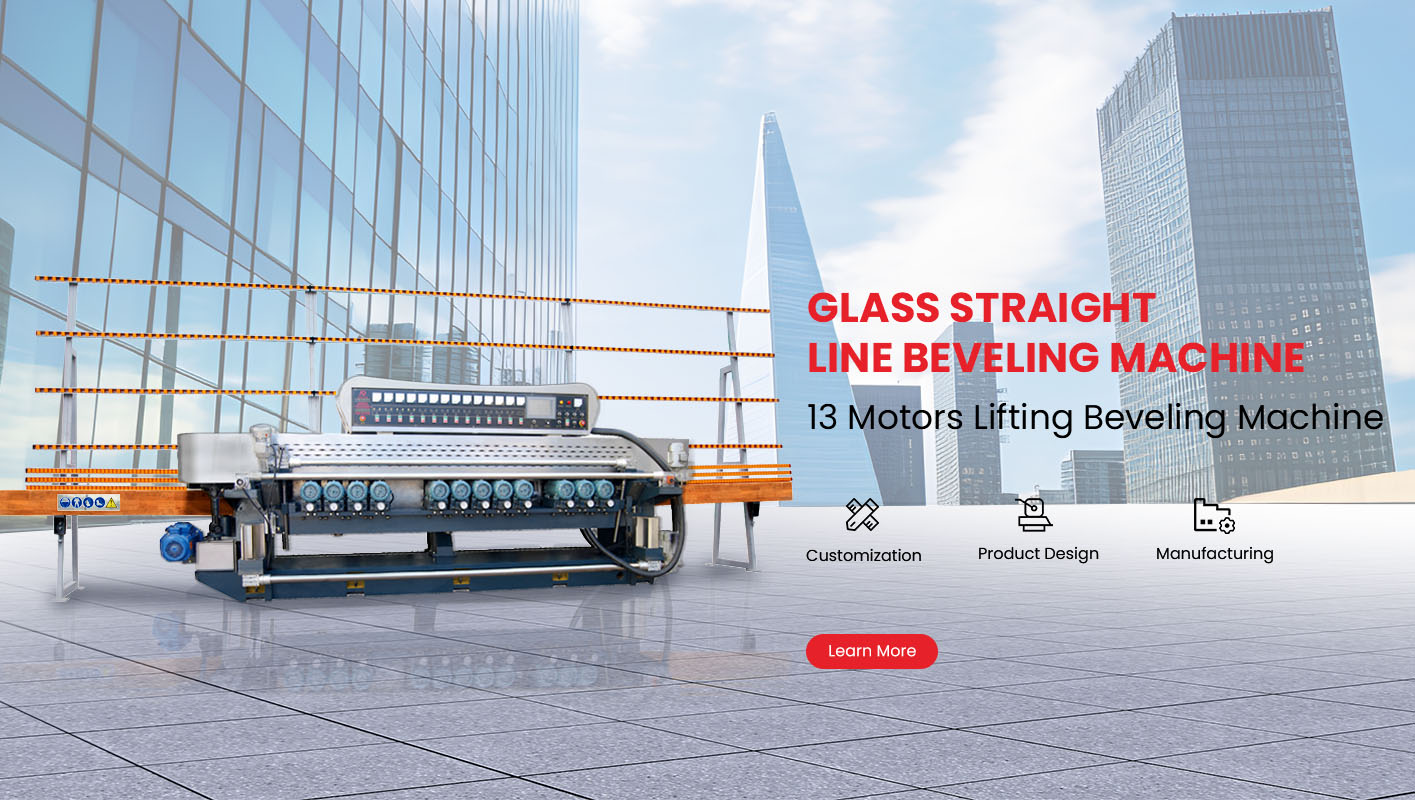
A beveling machine performs a different job. Instead of finishing only the outer edge, it cuts and polishes the edge into an angle, creating a wider sloped surface that is more decorative and more visually prominent. ADDTECH describes its beveling equipment as being used for angled edges on glass and mirrors, especially where appearance matters. One of its recent examples lists bevel angles from 3 degrees to 45 degrees and bevel width up to 60 mm, showing that beveling is a shaping process rather than a simple finishing pass.
Edging machines are usually chosen for production lines where throughput, consistency, and everyday practicality matter most. Flat glass for windows, partitions, shower screens, shelves, tabletops, and many industrial panels often relies on a stable Glass Edging Machine because the goal is a clean edge, repeatable quality, and efficient output across different thicknesses. ADDTECH also states that its edging equipment can handle tempered glass, laminated glass, and low-E glass, which is valuable for factories serving multiple segments.
beveling machines are more common where decorative value is part of the sale. Mirrors, premium furniture glass, interior decorative panels, and some display products often use a Glass Beveling Machine to create a more refined visual effect. The bevel adds light reflection and gives the finished product a more premium look, which can raise the selling price of the processed glass.
From a purchasing perspective, the difference is not only in edge shape. It also changes how you plan labor, order flow, and profit structure.
With edging, the focus is usually on production efficiency and repeatability. The edge grinding process is generally more standardized, which helps when factories run larger volumes, frequent size changes, or mixed daily orders. Straight edging is often the better fit when the main requirement is reliable finishing without adding decorative complexity. ADDTECH’s straight-line models are presented as suitable for varied thicknesses and sizes, which supports this kind of flexible daily production.
With beveling, the focus shifts toward finish quality, angle accuracy, and visual consistency. This usually means tighter process control, more attention to wheel condition, and closer alignment between machine settings and product design. When buyers ask about edging vs beveling machine, the real question is often whether the factory is selling functional glass or value-added decorative glass. The answer affects both machine choice and return on investment. ADDTECH’s beveling model example shows controlled angle range, controlled width, and feeding speed flexibility, which are important when finish quality directly affects commercial value.
| Item | Edging Machine | Beveling Machine |
|---|---|---|
| Main result | Flat finished edge | Angled decorative edge |
| Main purpose | Safety, smoothness, dimensional finish | Appearance, decorative value, polished slope |
| Typical products | Window glass, partitions, shelves, doors | Mirrors, furniture glass, decorative panels |
| Production priority | Efficiency and consistency | Visual quality and angle precision |
| Process complexity | More standard | More finish-sensitive |
The best way to compare the glass processing machine difference is to start from the product mix rather than the catalog page.
If most of your orders are standard architectural or utility glass, edging usually delivers the faster payback because it solves the daily need for clean, safe, consistent edges. If your orders include mirrors or higher-end decorative glass, beveling can add visible value that supports higher margins.
The second factor is maintenance. In real production, machine uptime matters more than brochure language. ADDTECH repeatedly emphasizes stability and easy maintenance across its equipment positioning, which is important because glass processors do not only buy a machine once. They also buy future service workload, spare parts logic, and long-term operating predictability.
The third factor is expansion planning. A factory that already runs drilling, washing, edging, and special-shape work may benefit from choosing a supplier with a broader glass processing machinery portfolio, especially when the next step is line integration or additional process stations. ADDTECH lists products across multiple glass-processing categories, which can simplify future equipment matching and technical communication.
Edging and beveling machines are not interchangeable. One is centered on functional edge finishing, while the other is centered on angled decorative shaping. The better choice depends on whether your factory prioritizes standard output, decorative value, or a mix of both. A manufacturer with experience in both machine types is usually better positioned to help match equipment to real production needs rather than sell a generic solution.
For factories reviewing new equipment, it is worth comparing edge finish target, daily product mix, thickness range, maintenance expectations, and future line expansion before making a final decision. A clear machine choice at this stage can reduce rework, improve finish consistency, and support more stable long-term production results.
Previous: