info@gdaddtech.cn
+86-18566873215



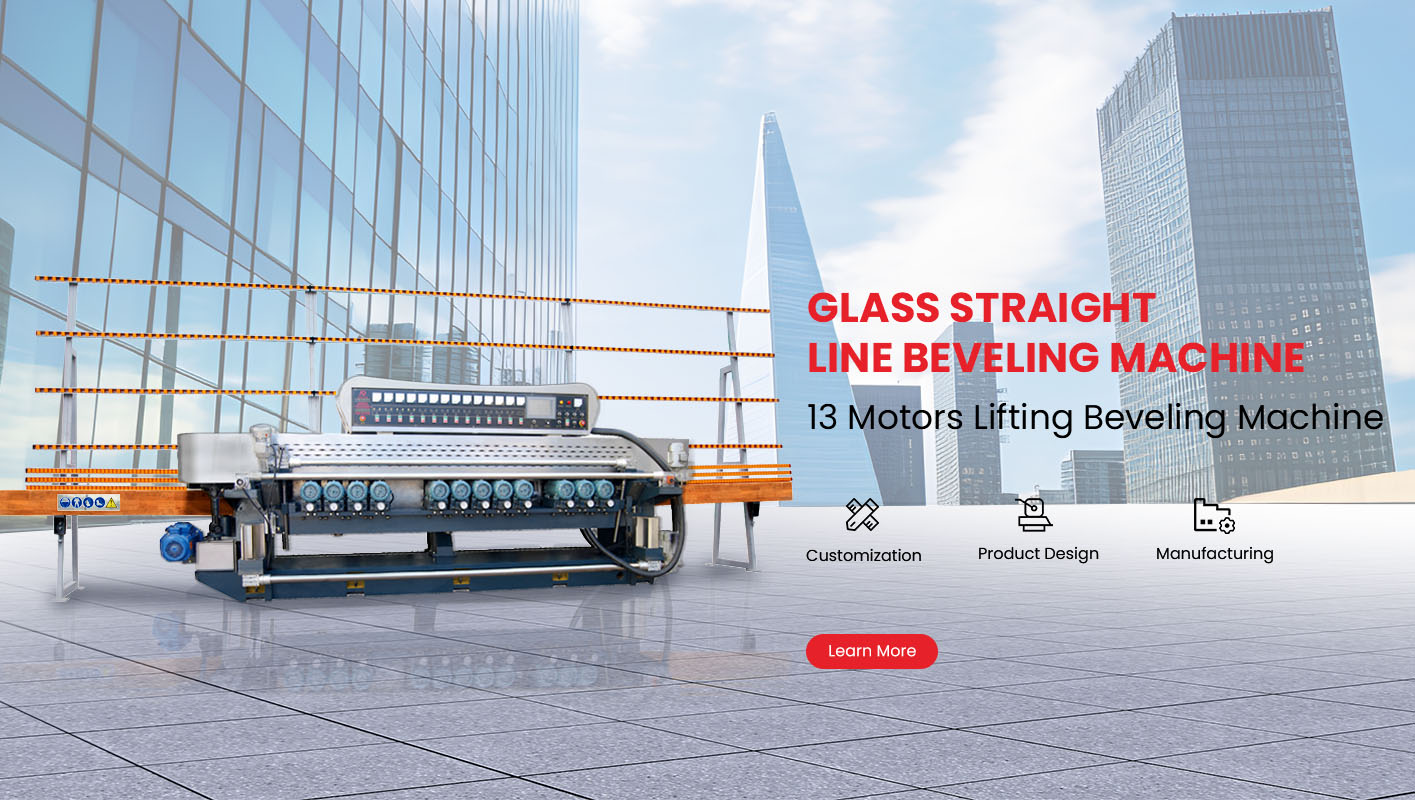
Selecting the right spindle number is one of the most important decisions when buying a glass straight-line edger. The spindle layout determines how much work can be completed in a single pass, how stable the edge quality will be, and how well the machine matches your glass thickness, production speed, and finishing target. On the ADDTECH product side, the available straight-line edging configurations span multiple levels, including 8, 9, 10, 11, and 12 motor options, which reflects a clear principle in glass processing: spindle quantity should follow the process route, not just the budget.
A practical way to think about spindle selection is to start from the edge result you need. In straight-line edging, the usual sequence includes coarse grinding, fine grinding, chamfering, bottom edge treatment, and polishing. ADDTECH states that its 11-motor model can complete coarse grinding, fine grinding, edge bottom treatment, chamfering, and felt wheel polishing in one pass, which shows why higher spindle counts are often chosen for factories that need cleaner process integration and fewer manual adjustments between steps.
If the main target is a basic safe edge for downstream handling, fewer spindles may be enough. If the target is a visually smooth flat edge with stable arris quality and better polishing consistency, more spindle stations usually provide a better process balance. This matters because glass edge strength is closely related to surface quality. Research summarized by GlassOnWeb notes that the manufacturing process influences the mechanical strength of the glass edge, and polished edges are often treated as having the highest mechanical quality in standards discussions, although actual results still depend heavily on the process itself.
That is why spindle selection should never be reduced to a simple rule such as more motors always being better. For commodity output with moderate finish requirements, a lower spindle count may already support the required result. For architectural glass, furniture glass, appliance glass, or glass that will move into heat treatment and stricter appearance inspection, the process window becomes narrower, so a more complete spindle arrangement is often the safer choice. Pilkington notes that glass prepared for heat treatment is typically seamed, arrised, edge ground, or polished to ease handling and reduce breakage risk during tempering, and it also stresses that grinding fines must be completely washed off before heat treatment.
The first question is not how many spindles the machine has. The first question is how many operations you expect the machine to complete without sacrificing line rhythm.
A lower spindle count usually suits simpler process routes, smaller batches, or workshops that prioritize flexibility over maximum finish integration. A mid-range layout is often chosen when the user needs a stable mix of grinding and polishing with reasonable output. A higher spindle count is more appropriate when the goal is to combine shaping, fine finishing, and polishing in one continuous flow, especially when appearance consistency affects downstream value.
Here is a practical comparison:
| Spindle level | Typical process suitability | Best fit |
|---|---|---|
| 8 to 9 spindles | Basic edging plus limited finishing integration | Entry production, general flat glass work, cost-sensitive orders |
| 10 spindles | More balanced process coverage | Regular commercial production with better finish expectations |
| 11 to 12 spindles | Fuller one-pass route with stronger polishing and quality stability | Higher output lines, stricter finish control, lower rework pressure |
This comparison aligns with the way ADDTECH structures its straight-line edging range and with broader industry practice, where extra wheel positions are used to improve completeness of edge finishing rather than only increasing machine complexity.
Spindle selection also depends on the thickness range and product mix you run every day. Industry references show straight edgers can cover wide processing ranges. GlassOnWeb lists straight edgers for sheets from 3 to 55 millimeters thick, while double edging lines are shown for thicknesses from 2 to 20 millimeters depending on machine structure. This does not mean every machine handles every job equally well. It means the wheel arrangement, adjustment method, and process stability become more important as your product mix widens.
If your factory mostly runs one thickness band and one edge standard, a simpler setup can be efficient. If your orders frequently switch among thin decorative glass, furniture panels, and thicker architectural pieces, a glass straight line edging machine with more process positions can reduce setup pressure and help keep the finish stable across changeovers. On ADDTECH equipment, front rail adjustment, automatic clamping, and stable transmission are designed to support thickness adaptation and processing consistency, which is especially useful when production is not limited to one fixed specification.
Choosing too few spindles can create hidden cost later. The initial machine price may be lower, but the line may need slower speed, more manual correction, or secondary processing to reach the required finish. In edge processing, poor surface quality is not just an appearance issue. Research on glass edge quality shows that grinding and cutting parameters directly influence crack formation and final strength behavior. In other words, the wrong process setup can cost more through breakage, rejects, and inconsistent tempering performance than the savings made at procurement stage.
For buyers comparing machine options, the better question is this: what is the cost per qualified meter of processed glass after polishing, washing, inspection, and downstream handling? That question usually leads to a more rational spindle choice.
A higher spindle count is worth serious consideration when you face any of the following conditions:
You need coarse grinding, fine grinding, chamfering, bottom edge processing, and polishing in one pass
Your line feeds tempering or other downstream processes with strict edge cleanliness and consistency requirements
Your orders include visible edge products where polishing quality influences final sales value
You need stable output with less operator intervention
You want to reduce rework, chipping risk, and process interruptions
ADDTECH’s straight edge grinding line concept also supports this logic. Its line solution combines four edging machines and three transfer tables to process four parallel straight edges, with rough grinding, fine grinding, and bottom edge polishing completed in one integrated flow. That reflects a manufacturing mindset focused on process continuity and output efficiency rather than isolated machine performance.
ADDTECH has been focused on glass machinery since 2007 and states that it specializes in the development, manufacture, and sale of straight edge machines, bevel edge machines, cleaning machines, round edge machines, special-shaped machines, and drilling machines. The company also highlights 10 patented technologies, 7 product series, and 28 models, along with automatic oiling and lubrication design intended to improve stability and maintainability. For buyers selecting spindle configurations, that matters because spindle count alone is never enough. The machine must also deliver stable transmission, manageable maintenance, and reliable long-term accuracy.
The best spindle number is the one that matches your real production route.
Choose a lower spindle configuration when your edge standard is basic, your product range is narrow, and cost control is the top priority. Choose a mid-range configuration when you need a balanced machine for daily commercial work. Choose 11 or 12 spindle level equipment when you need one-pass completeness, better polishing consistency, wider process tolerance, and lower rework risk.
In practical procurement, the most reliable method is to review your main glass thickness range, required edge finish, downstream tempering or assembly demands, and daily output target together. Once those four factors are clear, the spindle number becomes a technical decision instead of a guess. That is exactly where an experienced manufacturer such as ADDTECH creates value by matching the machine structure to the production objective, not just offering a standard catalog model.