info@gdaddtech.cn
+86-18566873215



In glass finishing, output is not judged by speed alone. A line may run fast and still lose money through edge chipping, polishing inconsistency, water marks, unstable size accuracy, or frequent downtime. These problems usually come from a small number of root causes: unstable machine settings, worn grinding wheels, poor water control, weak transfer coordination, and maintenance routines that react too late. In practical production, the goal is not only to remove defects, but to build a line that repeats the same result shift after shift. ADDTECH focuses on high precision glass processing equipment, was founded in 2007, and highlights stability, easy maintenance, and EU CE certification as core strengths in its product development and manufacturing approach.
A modern finishing line usually links edging, transfer, washing, drilling, or special shape processing into one coordinated workflow. ADDTECH’s product range covers Glass Edging Machines, beveling machines, 45 degree edging machines, pencil edging machines, drilling machines, washing machines, laminating machines, irregular grinding machines, and complete edging lines. Its glass straight edge grinding line is described as a system of four edging machines and three transfer tables that can complete rough grinding, fine grinding, and polishing in one continuous route. That kind of integrated design matters because many production problems begin not at one machine, but in the handoff between machines.
One of the most common complaints in glass finishing lines is chipping at the leading edge or corner. This often appears when glass enters the grinding section under unstable pressure, when wheel selection does not match glass type and thickness, or when feed speed is too aggressive for the first grinding stage. The result is not only scrap. It can also create downstream breakage risk during tempering or installation because edge quality directly affects the final integrity of processed glass. Standards used in toughened glass production, including EN 12150, specifically address edge-related quality phenomena such as edge lift and distortion, which shows how critical edge condition is in the wider processing chain.
The fix starts with process matching. The first grinding wheels must be selected for the real production mix rather than used as a universal setup for every order. Feed speed should be reduced when thickness changes or when the line switches from common float glass to more sensitive coated, laminated, or large-format panels. Conveyor clamping pressure also needs verification because unstable transmission creates micro vibration before the wheel even touches the edge. On automated lines, recipe management helps operators save proven settings for repeated jobs, reducing setup drift across shifts. ADDTECH specifically emphasizes PLC and HMI based automation, real-time adjustment, and recipe style control logic as important features for precision and repeatability.
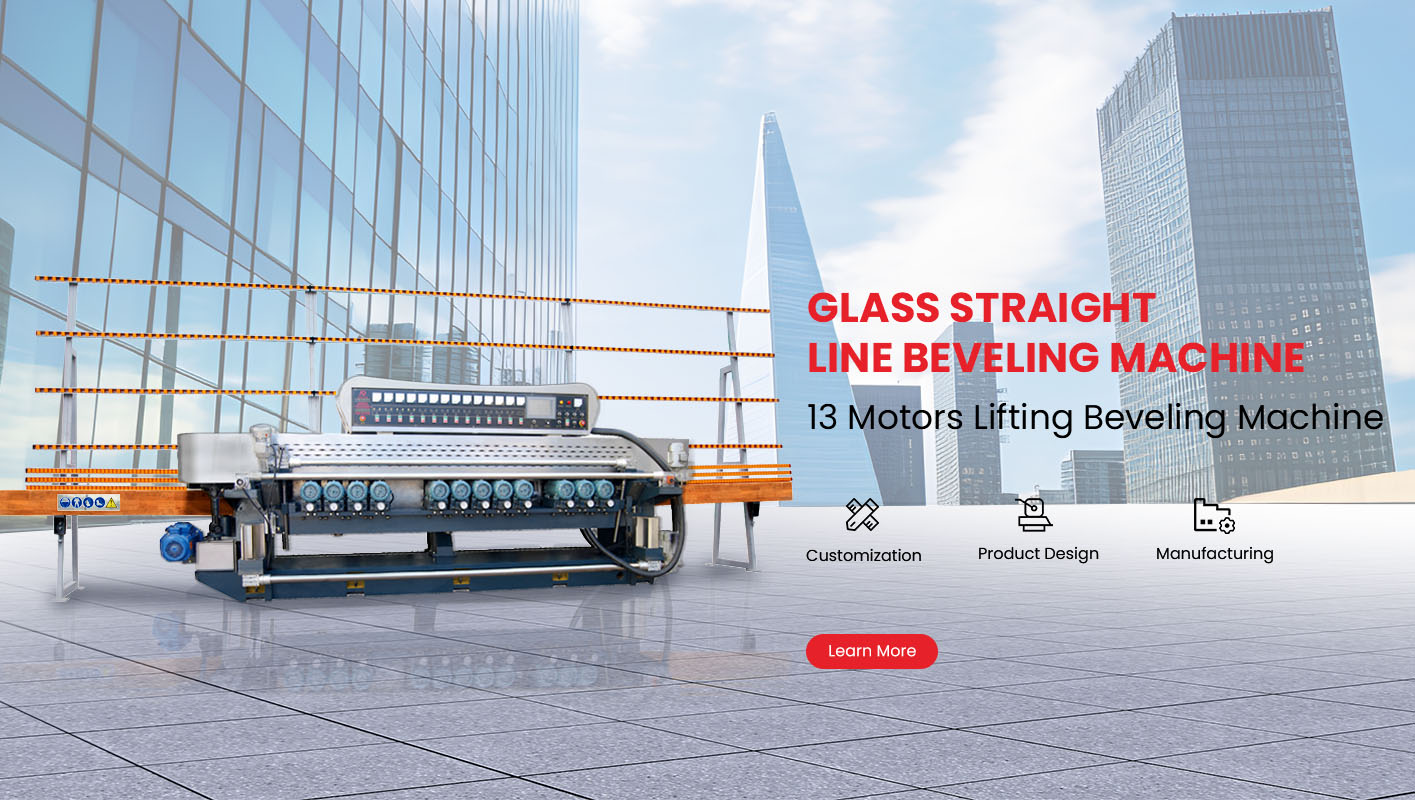
Another frequent issue is that the edge shape is acceptable, but the polishing result is inconsistent. One section looks bright while another remains hazy or shows fine grinding marks. In most cases, the cause is wheel wear imbalance, coolant flow inconsistency, or poor synchronization between rough grinding, fine grinding, chamfering, and polishing stations. This is exactly why multi-head equipment matters. A properly configured 13 Motors Glass Edging Machine gives the process enough station capacity to distribute roughing, finishing, chamfering, and polishing more precisely across the full edge path.
The correct response is to treat polishing as a system rather than a final step. Wheel condition should be logged by production hours, not replaced only after visual defects appear. Coolant nozzles must be checked for partial blockage, because one weak flow point can overheat the contact zone and reduce surface quality. Operators should also compare spindle load trends between heads. When one station carries more load than intended, the next station is forced to compensate, and the final polish becomes unstable. ADDTECH positions its machines around high precision processing and easy maintenance, which is valuable here because polishing quality improves when wear parts, lubrication points, and adjustment structures are designed for fast and repeatable service access.
A finishing line can produce accurate edges and still fail at final appearance because of water marks, dust residue, or contamination after washing. This becomes more serious when the glass will enter laminating, coating-sensitive, or high-visibility architectural applications. Industry guidance for coated glass processing stresses that water quality is critical and recommends heated, demineralised, neutral pH water in automatic washing. Machine specifications in glass washing applications commonly set rinse water conductivity at or below 40 microSiemens per centimeter to reduce residue and spotting.
The practical fix is to stop treating washing as a utility stage and start managing it as a quality stage. Conductivity should be monitored routinely. Brushes should be matched to the glass surface and kept free from embedded particles. Water tanks, filters, and air knives need scheduled cleaning rather than emergency cleaning. When water recycling is used, filtration performance must be checked with the same discipline as grinding wheel wear. ADDTECH offers Glass Washing Machines within a broader processing portfolio, which makes it easier to build a more stable line logic between edge processing and final cleaning instead of solving defects one machine at a time.
When the same order runs differently from one batch to the next, the problem is usually not a single component failure. It is usually a control discipline issue. Repeatability drops when thickness compensation is inconsistent, glass positioning drifts during transfer, or operators manually correct settings too often. In automated glass processing, stable output depends on programmable control, stored process parameters, and consistent machine-to-machine coordination. ADDTECH’s own guidance on selecting glass processing equipment highlights precision, repeatability, automated workflows, PLC systems, HMI screens, and recipe management as core capabilities for reducing manual variability.
The fix is to standardize job setup. Every recurrent order should have a locked parameter sheet tied to glass thickness, edge type, feed speed, wheel sequence, and washing requirements. A short first-piece approval routine should be mandatory before full batch release. Transfer tables must also be checked for height alignment and smooth movement because small misalignment upstream can show up later as a size or edge defect. On a complete line, consistent repeatability is not built by one excellent machine alone. It is built by mechanical alignment, control consistency, and disciplined process verification at every transition point.
Many factories accept short stops as normal until they become a major capacity problem. In reality, finishing lines often lose more output through repeated small interruptions than through one major breakdown. Lubrication gaps, delayed wheel replacement, dirty sensors, weak transfer belts, and neglected refueling systems create a pattern of unstable uptime. ADDTECH product information highlights automatic refueling on front and rear platen drive systems in some models, and the company repeatedly positions easy maintenance as a design advantage. That is important because maintenance accessibility has a direct effect on real line availability.
The fix is preventive structure. Maintenance tasks should be split into shift, weekly, and monthly levels. Shift checks cover coolant flow, wheel condition, conveyor cleanliness, and abnormal sound. Weekly checks cover lubrication points, spindle condition, chain or bearing wear, and transfer table alignment. Monthly checks review part consumption trends and compare downtime events by cause. When a line records the same fault repeatedly, the answer is rarely to restart faster. The answer is to remove the root cause through planned inspection and parts replacement logic.
| Challenge | Typical root cause | Practical fix |
|---|---|---|
| Edge chipping | Wrong wheel match, excessive feed speed, unstable entry pressure | Adjust wheel sequence, slow first-stage feed, verify conveyor pressure |
| Weak polishing consistency | Uneven wheel wear, poor coolant flow, load imbalance between heads | Track wheel life, inspect nozzles, monitor spindle load |
| Water marks after washing | High conductivity water, dirty brushes, weak filtration | Control water quality, clean brushes, maintain filters and tanks |
| Batch-to-batch deviation | Manual overcorrection, unstable recipes, poor transfer alignment | Use standard job parameters, first-piece checks, align transfer sections |
| Repeated downtime | Reactive maintenance, missed lubrication, delayed wear-part replacement | Build preventive maintenance routines and fault trend review |
The value of this table is simple: most glass finishing problems are predictable. Once the line records defects by type and by station, the pattern becomes visible, and the corrective path becomes much faster.
Production challenges are never solved by software alone and never solved by mechanics alone. They are solved when both work together. That is why equipment design matters so much in daily production. ADDTECH builds machines for straight edging, beveling, 45 degree edging, drilling, washing, special-shaped processing, and line integration, with a focus on high precision, stability, and easier maintenance. For factories processing multiple glass types and order sizes, that combination is valuable because stable mechanics reduce variation and good control systems reduce human setup drift.
For some plants, upgrading to a 13 motors glass edging machine is also a practical way to improve finishing stability when the product mix includes higher appearance requirements or more demanding edge profiles. More process stations can help distribute grinding and polishing loads more rationally, provided the line is configured correctly and maintained consistently. Equipment capacity alone is not the answer, but the right capacity creates more room for process control.
A final point is often ignored in discussions about output and quality: dust and environmental control. OSHA states that employers must keep respirable crystalline silica exposure below 50 micrograms per cubic meter as an 8 hour time-weighted average, and the action level is 25 micrograms per cubic meter. In finishing environments where grinding and edge work are active, dust control, wet processing discipline, extraction performance, and housekeeping should be treated as part of line management, not separate from it. A cleaner line is usually a more stable line.
The most common production challenges in glass finishing lines are not mysterious. They usually come from edge control, polishing balance, water quality, repeatability discipline, and maintenance timing. Once those five areas are managed with clear standards, defect rates fall, uptime improves, and finished glass quality becomes easier to predict. ADDTECH’s advantage is that it approaches glass processing as a full manufacturing system, combining stable machine structure, broad equipment coverage, automation capability, and maintenance-friendly design to support long-term finishing performance.