info@gdaddtech.cn
+86-18566873215



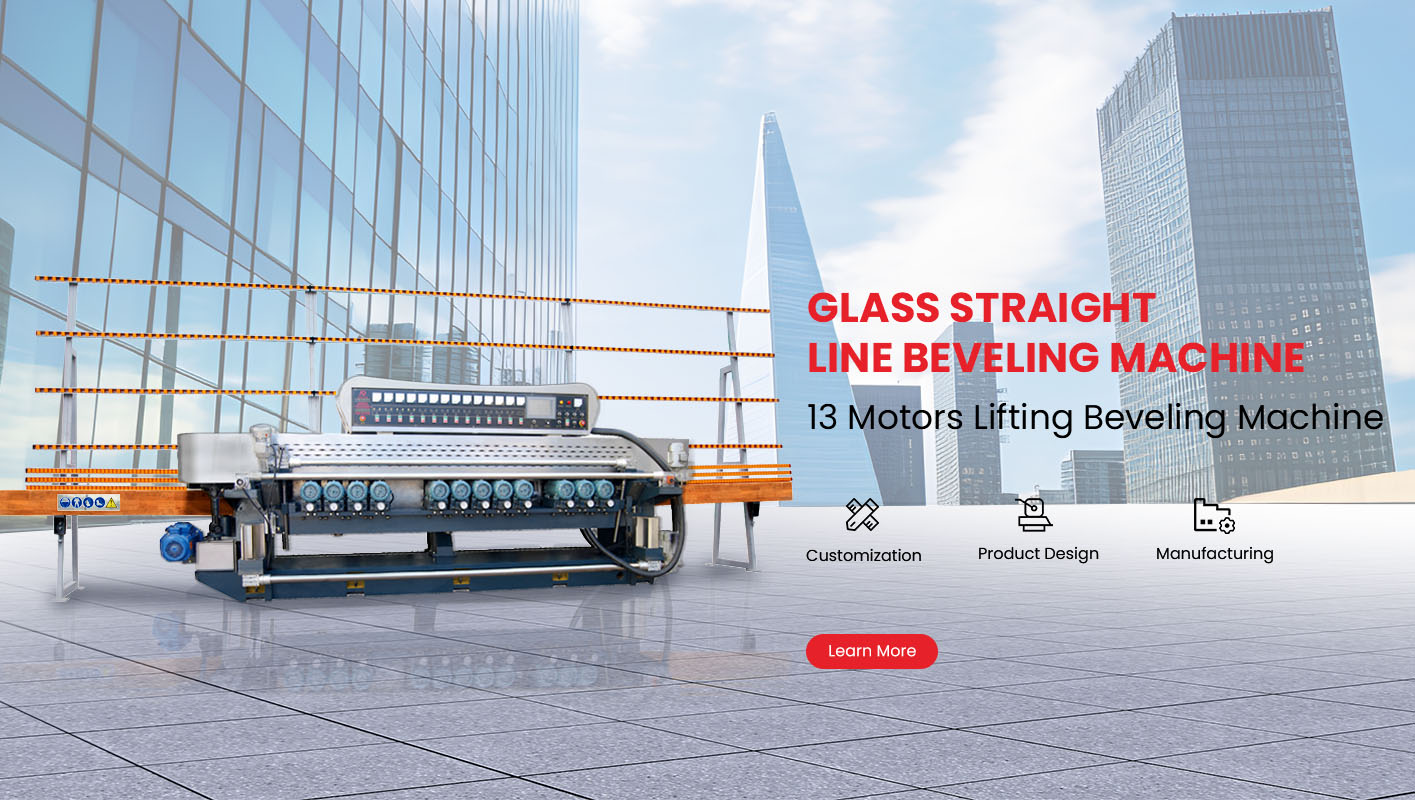
A 45 degree Glass Edging Machine is a precision fabrication machine designed to grind and polish glass edges at a controlled angle, most commonly creating a clean 45 degree arris or miter-style edge. Instead of leaving a sharp cut edge, the machine removes micro-chips and roughness, then refines the surface through staged grinding and polishing so the glass is safer to handle, easier to assemble, and visually cleaner in finished products.
In practical production, this equipment is often selected when you need repeatable angled edgework on flat glass across many parts, especially when dimensional consistency matters for fit-up, sealing lines, and final appearance. ADDTECH positions its 45 degree equipment for processing panels with adjustable angles from 0 to 45 degrees and completing rough grinding, fine grinding, chamfering, and polishing in one pass.
Many buyers use 45 degree to describe two common outcomes:
45 degree arris on a flat-polished edge
This is a small chamfer on both sides of the glass edge to remove sharpness and improve edge durability. One fabrication tolerance reference describes flat polishing as executing a 45 degree chamfer and notes a typical chamfer-width tolerance of plus or minus 1/32 inch.
45 degree miter edge for joining at an angle
This is used when panels must meet cleanly at corners, where angle stability directly affects alignment.
If your production goal is consistent assembly and reduced rework, the key is not the label 45 degree, but whether the machine can hold angle, edge straightness, and surface finish within your acceptance limits over long runs.
A typical workflow is staged edge conditioning:
Feeding and clamping stabilize the sheet so it tracks straight through the machine.
Rough grinding removes saw marks and corrects edge geometry.
Fine grinding tightens dimensional control and reduces edge defects.
Chamfering forms the target angle, commonly 45 degrees.
Polishing improves edge clarity and reduces micro-scratches.
ADDTECH describes its 45 degree straight-line edging machine as finishing coarse grinding, fine grinding, chamfering, and polishing at one time, with multiple grinders that can swing from 0 to 45 degrees to achieve a 45 degree edge.
When specifying a 45 degree glass edging machine, these metrics are the most useful to lock down in your internal acceptance plan:
Angle consistency and repeatability
Even small angle drift can cause visible gaps at joints and inconsistent light lines on exposed edges. ADDTECH notes accuracy expectations in its discussion of 45 degree edging performance, including tight deviation claims for precision edge finishing.
Chamfer or miter dimension tolerance
If your drawings call for a defined arris width, align your tolerance language with known fabrication references. A tolerance standard for edgework states a 45 degree chamfer and gives a common tolerance for chamfer width of plus or minus 1/32 inch.
Heat-treatment readiness
In architectural fabrication workflows, edgework is often performed before tempering or heat strengthening. A glass edgework reference notes edgework is completed prior to heat treating and discusses laminate ply mismatch risk.
Below is a practical checklist you can use in RFQs and internal comparisons.
| Evaluation item | What to confirm | Why it matters in production |
|---|---|---|
| Angle range | Whether 0 to 45 degrees is supported and how angle is set | Lets you standardize one platform for multiple edge specs |
| One-pass process | Rough to polish completed in one run | Reduces handling and cycle time, improves consistency |
| Control system | PLC controls and adjustment method for thickness and angle | Improves repeatability and reduces operator dependence |
| Clamping stability | Automatic clamping approach and how it handles different thickness | Better edge straightness and fewer chips at entry/exit |
| Speed and load control | How motor speed and working load are adjusted | Helps balance throughput with finish quality |
| Glass size flexibility | Min and max practical part size in your plant flow | Prevents bottlenecks when jobs mix small and large panels |
For project buyers working on repeat architectural SKUs, this checklist also makes it easier to define an OEM/ODM configuration baseline without over-customizing the first purchase.
From a manufacturer perspective, the value of ADDTECH is not only the machine category, but the combination of production stability, compliance signals, and engineering capability:
Company and capability foundation
ADDTECH states it was founded in 2007 in Foshan and focuses on high-precision glass processing equipment, with EU CE certification and national high-tech positioning.
Product focus for angled edging
The published 45 degree models emphasize PLC control, adjustable grinding head angle from 0 to 45 degrees, and integrated coarse-to-polish processing, supporting consistent output with fewer steps.
Engineering depth and innovation
ADDTECH states it has a technical team and more than ten invention patents in China, which is a meaningful signal if you require a long-term solution provider for commercial-grade glass processing lines.
To avoid buying the right machine for the wrong workflow, define these items before you request a quotation:
Your target edge type: 45 degree arris versus true miter edge
Your acceptance limits: chamfer width tolerance, angle deviation, and edge appearance criteria
Your throughput requirement: parts per shift and changeover frequency
Your downstream process: whether you heat-treat after edgework and how you handle laminated stack-up tolerances
If you share those parameters, ADDTECH can align machine configuration and process settings to your output goal instead of forcing you to adapt production around the equipment.