info@gdaddtech.cn
+86-18566873215



Installing a glass processing machine is not only about placing equipment on the shop floor. A good installation protects edge quality, reduces vibration-related defects, and shortens the time from delivery to stable production. Below is a manufacturer-oriented, step-by-step approach you can use to plan and execute installation for typical glass edging, beveling, drilling, and washing equipment.
ADDTECH focuses on developing and manufacturing glass machinery with stability, precision, and maintainability as core priorities, including a patented lubrication approach designed to improve operating stability and service convenience.
Start with a clear layout that matches your process flow: raw glass staging, infeed, processing, outfeed, inspection, and packing. For wet processes such as edging and beveling, plan drainage and splash control early because retrofits after installation are costly.
Two practical sizing rules help avoid last-minute relocation:
Keep at least 800–1200 mm service access on the electrical cabinet side and the maintenance side so technicians can reach motors, pumps, belts, and coolant lines without removing other equipment.
Reserve a straight-line buffer before infeed and after outfeed. This reduces handling pauses and minimizes edge damage from rushed loading.
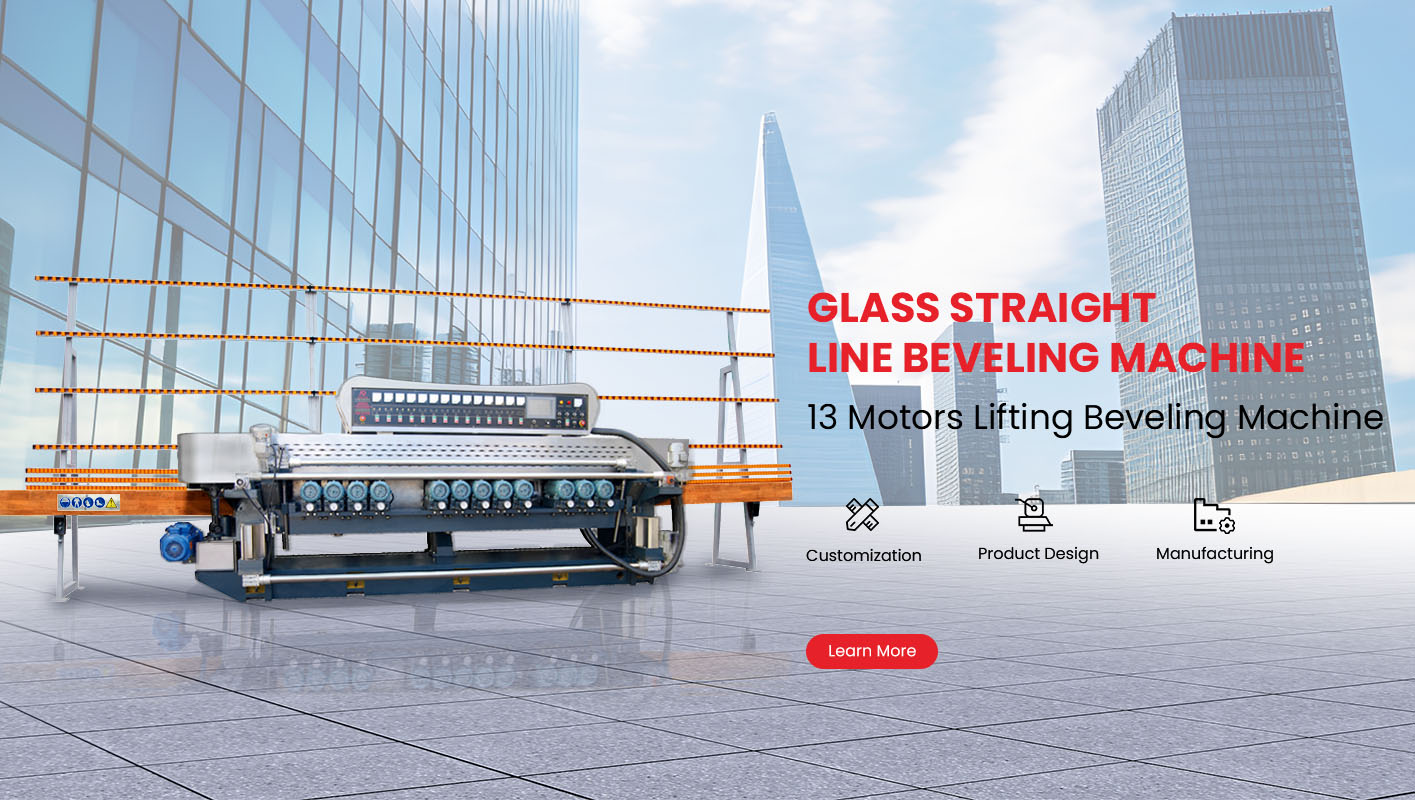
If you are setting up a beveling line, confirm the machine footprint and mass in advance so your foundation and lifting plan are correct. For example, an ADDTECH straight-line beveling model lists an overall size of 6800 × 1300 × 2500 mm and a machine weight of 4000 kg, which materially affects unloading, positioning, and floor loading.
Treat unloading as a controlled lift, not a logistics formality:
Verify the machine center of gravity and lift points with the packing list and on-machine markings.
Use rated slings and spreader bars to prevent frame distortion.
Move slowly on uneven floors; sudden shocks can shift alignment on linear guides and pressing plates.
A useful handling reminder comes from the material itself: soda-lime glass density is commonly around 2500 kg/m³, which means large sheets become heavy quickly and require safe staging near the infeed area.
Precision grinding and polishing are sensitive to vibration. Your goal is to create a rigid, level base so the machine can hold geometry under load.
Recommended approach:
Inspect the floor for cracks, hollow sections, and unevenness in the machine travel direction.
Level the machine using adjustable feet first, then confirm with a precision level across key beams.
Anchor only after leveling is stable. If you anchor too early, you can “lock in” twist that later shows up as inconsistent edge quality.
For higher-power, heavier models, consider a reinforced pad or isolated foundation if your workshop has frequent forklift traffic or nearby punching equipment. The point is to reduce micro-vibration that accumulates as waviness or polishing inconsistency.
Most glass processing machines rely on stable electrical supply and well-managed coolant flow. Always align utilities to the machine’s nameplate and manual.
Using an ADDTECH beveling machine example, the listed electrical requirement is 380 V / 50 Hz with 22.7 kW power. That is enough load that you should plan cable sizing, breaker selection, and grounding with a qualified electrician.
A simple installation checklist is below.
| Item | What to prepare | Why it matters |
|---|---|---|
| Electrical supply | Correct voltage/frequency, dedicated breaker, protective grounding | Prevents nuisance trips, overheating, and unstable spindle load |
| Water and coolant loop | Stable supply, filtration plan, easy-access tank cleaning | Protects pumps and improves surface finish consistency |
| Drainage | Floor drain or collection system near wet zone | Prevents slippery floors and reduces corrosion risk |
| Compressed air (if used) | Clean, dry air and correct pressure | Protects pneumatic valves and improves actuator response |
| Lighting and access | Task lighting around infeed/outfeed and service side clearance | Speeds inspection and reduces handling mistakes |
Commissioning is where most long-term stability is “earned.” Do it in stages:
Mechanical verification Confirm fasteners, guarding, belts/chains, lubrication points, and pressing plate movement. ADDTECH highlights stability and maintainability as design priorities, so take advantage of that intent by documenting lubrication intervals and inspection points during commissioning.
Electrical and rotation check Power on, verify emergency stop logic, then jog motors to confirm rotation direction. Incorrect rotation on pumps or spindles can cause immediate damage.
Wet run Introduce coolant/water, verify flow rate is stable, and confirm no leaks at tanks and hoses. Check that splash guards protect nearby electrical components.
Process trial Run a small batch with representative thickness. For the referenced beveling model, the listed processing thickness range is 3–19 mm, and feeding speed is 0.5–5 m/min. Use these ranges as boundaries while you tune wheel condition, pressure, and speed for your target finish.
Installation is not complete until safety control is in place. During commissioning and later maintenance, apply formal energy-control procedures so the machine cannot start unexpectedly. OSHA’s lockout/tagout standard addresses unexpected energization and requires controls for hazardous energy during servicing and maintenance.
Before handover, build a simple operating discipline:
Define who can change wheels, adjust angles, or open guards.
Create a daily checklist: coolant level, lubrication status, abnormal vibration, and cabinet temperature.
Keep a spare-parts baseline aligned to your production plan so downtime stays predictable.
When you buy a glass processing machine, you are also buying a long-term production system. ADDTECH positions itself as a manufacturer specializing in straight edge machines, bevel edge machines, drilling machines, and washers, with an emphasis on high precision, stability, and ease of maintenance. Its site also notes patented technology and an automatic oiling/lubrication approach intended to improve stability and maintainability in operation. This is especially valuable when you need consistent output across shifts or when you run OEM/ODM projects that demand repeatable edge quality at scale.
If you want, you can share the specific ADDTECH model you plan to install and your workshop constraints (door width, floor thickness, power supply), and I can turn this into a one-page installation checklist you can send to your team and your solution provider.