info@gdaddtech.cn
+86-18566873215



When setting up a glass processing line, one of the most crucial aspects to consider is the electrical configuration of the equipment. Voltage, current, and total power demand directly determine operational efficiency, safety, and compatibility with regional electrical standards. Understanding these parameters ensures that your facility can support continuous production without overloads or energy waste.
Most glass processing machines are designed to work with industrial three-phase power systems due to their high energy consumption and need for stable current delivery. The typical configurations include:
| Region | Standard Voltage | Frequency | Phase Type |
|---|---|---|---|
| Europe & Asia | 380V–415V | 50Hz | 3-Phase |
| North America | 208V–240V | 60Hz | 3-Phase |
| Latin America | 440V–460V | 60Hz | 3-Phase |
For heavy-duty glass edging, tempering, or drilling machines, a three-phase 380V system is most common in manufacturing facilities. This configuration provides balanced power flow, minimizing voltage drops during startup or high-load operation.
Single-phase 220V connections may suffice for smaller auxiliary devices, such as control panels, loading conveyors, or washing units. However, for main production equipment, a three-phase setup is essential for consistent torque and long-term reliability.
The total power requirement of a glass processing machine depends on its type, size, and automation level. The following table provides an approximate range for typical equipment:
| Machine Type | Power Requirement | Typical Usage |
|---|---|---|
| Glass Cutting Table | 3–6 kW | Standard automatic glass cutting with air flotation |
| Glass Edging Machine | 10–25 kW | Continuous edge grinding and polishing |
| Glass Drilling Machine | 4–12 kW | Single or dual-head vertical drilling |
| Tempering Furnace | 120–250 kW | High-temperature heating and quenching |
| Washing & Drying Machine | 15–30 kW | Continuous washing before coating or lamination |
For a complete production line integrating cutting, edging, and tempering, the total installed capacity can reach 300–500 kW, requiring stable high-voltage input and efficient power distribution.
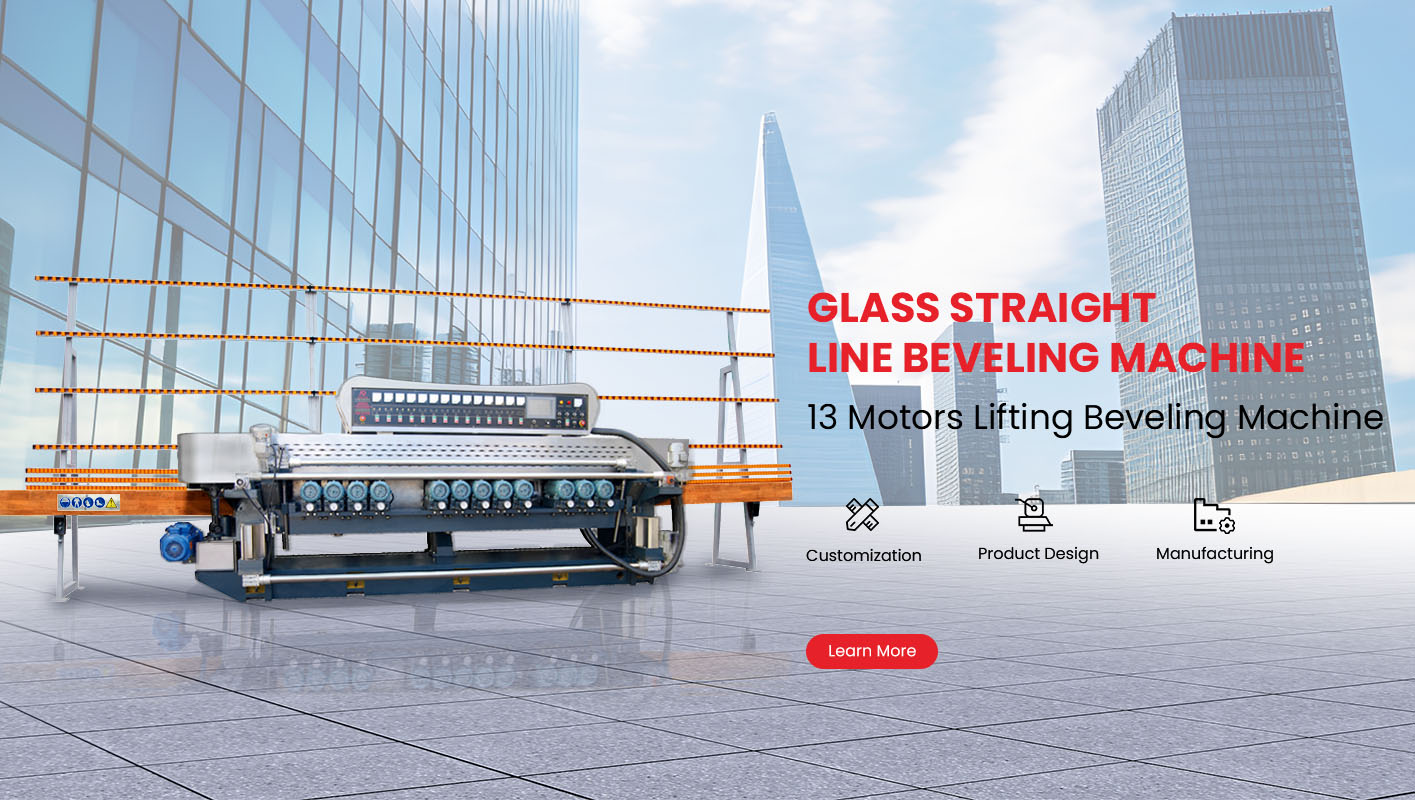
Every glass processing machine includes multiple motors, heating elements, and control circuits. For example, a typical CNC glass edging machine may use 10–15 independent motors, each rated from 1.5 to 3.0 kW. This configuration requires a main circuit breaker rated between 80A and 150A, depending on the operating voltage.
To maintain safety and performance:
Install separate circuit breakers for high-load components like spindles or heating zones.
Use thermal overload relays to prevent motor burnout.
Ensure that voltage fluctuations remain within ±5% of the rated value to avoid control system errors.
Regular inspection of power cables and terminals is also critical. Oxidation or poor connections can cause voltage drops, increased heat, and eventual failure of sensitive electronic components.
Modern glass processing machines increasingly adopt inverter technology (VFDs) and servo-driven systems to reduce power consumption. Variable frequency drives allow smooth acceleration and deceleration, reducing current spikes by up to 40% during motor startup.
Additionally, smart PLC-based systems can automatically adjust power distribution between machine sections. For instance:
The washing section powers down when no glass is detected.
The heating chamber in a tempering furnace modulates power based on glass thickness and batch size.
Idle conveyors operate in standby mode, lowering energy use by 20–30%.
By integrating these intelligent control systems, manufacturers like ADDTECH have significantly improved the energy efficiency of their glass processing lines while maintaining high production accuracy and stability.
Before installation, it is important to evaluate your factory’s power capacity and wiring layout. Here are some key recommendations:
Dedicated Transformer:
For large-scale equipment (such as furnaces or laminated glass lines), use a transformer rated at least 20–30% higher than the total machine power to handle startup loads.
Proper Cable Sizing:
Choose copper cables with sufficient cross-sectional area to reduce voltage drop below 2%. Inadequate cabling can lead to overheating and efficiency loss.
Grounding System:
A stable grounding network (less than 4Ω resistance) is mandatory for electrical safety and accurate signal transmission to CNC systems.
Power Factor Correction:
Use capacitors or automatic compensation units to maintain a power factor above 0.9, reducing reactive power penalties and improving energy efficiency.
Emergency Cutoff Integration:
Always install a clearly labeled main disconnect switch accessible to operators and maintenance personnel.
Understanding the voltage and power requirements of a glass processing machine is essential for safe, efficient, and reliable operation. Most machines operate on a three-phase 380V–415V supply, with total power ranging from 3 kW for small devices to 250 kW or more for large furnaces. Ensuring proper circuit design, power distribution, and energy management not only prevents equipment downtime but also reduces long-term operational costs.
For advanced, energy-efficient glass processing systems engineered to meet global voltage standards, ADDTECH provides comprehensive manufacturing solutions and installation guidance tailored to your facility’s electrical infrastructure.