info@gdaddtech.cn
+86-18566873215



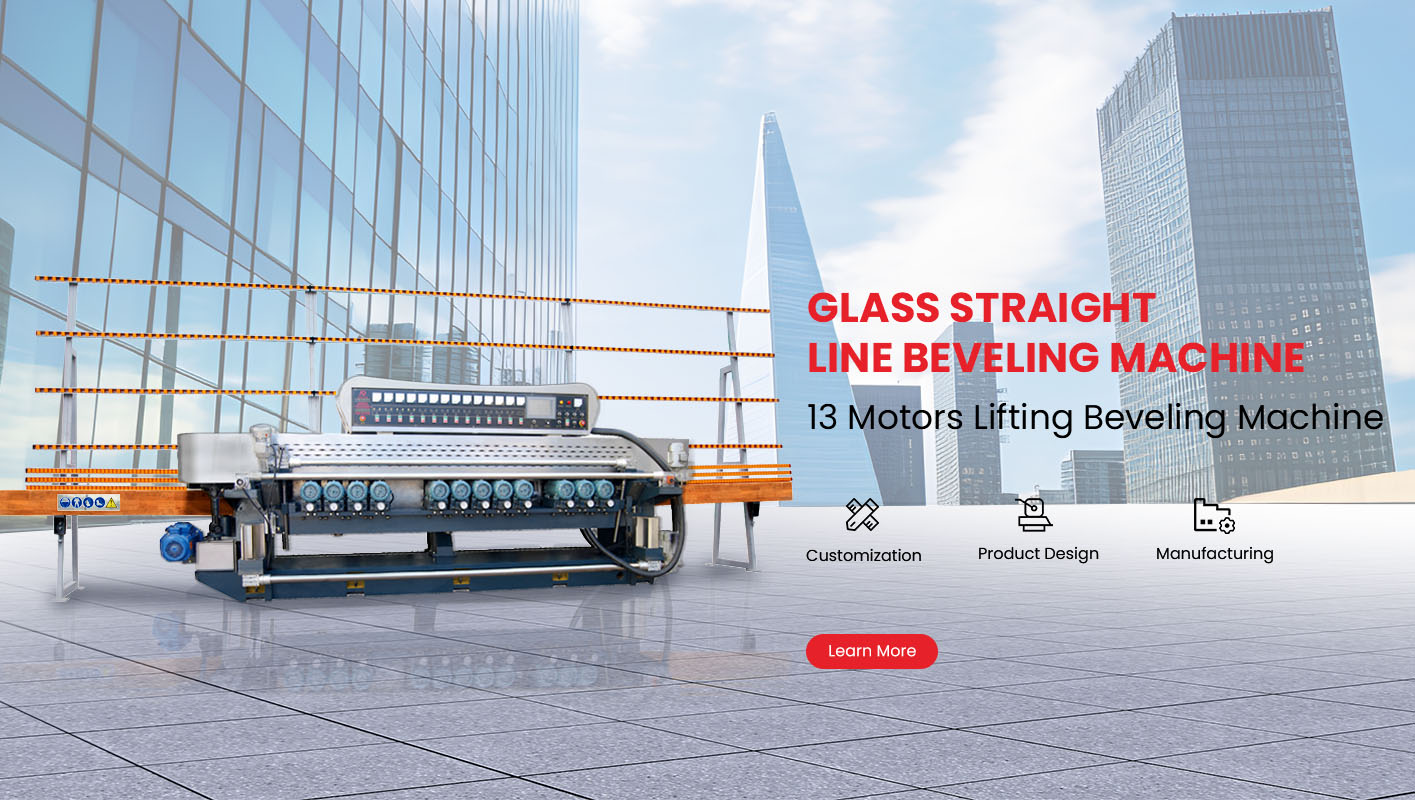
Automatic glass edge grinding is the process of using specialized machines to smooth, shape, and polish the edges of glass sheets without relying on manual operations. The system completes tasks such as edge trimming, beveling, corner rounding, and fine polishing through automated control, which increases production consistency and reduces labor intensity. This technology is widely used in architectural glass, furniture glass, automotive glass, and various precision glass products where uniform edge quality and safety are required.
Automatic edge grinding machines use motor-driven grinding wheels, water-cooling systems, and digital control modules to remove imperfections along the outer perimeter of the glass. Once the glass is loaded, sensors measure its size, adjust the grinding track, and ensure the glass remains stable throughout the process. The grinding head follows the programmed trajectory, maintaining constant pressure and speed. As the machine operates, rough grinding removes sharp edges while fine grinding and polishing restore clarity and smoothness to the glass surface.
Compared with manual processing, automatic grinding delivers higher precision, steadier performance, and repeatable results for large production runs. The entire system can handle diverse thicknesses and shapes, including rectangular panels, rounded edges, and irregular custom patterns. Manufacturers using this method minimize breakage risks and achieve higher output efficiency.
Automated grinding offers several advantages for factories handling medium to large volumes of glass components:
Higher accuracy due to programmable control and stable grinding pressure
Stronger safety performance by eliminating manual touching of sharp glass edges
Consistent quality across batches, especially when producing architectural or decorative glass
Faster production cycles with reduced downtime and fewer operator-dependent errors
Lower long-term production costs because of reduced waste and less rework
Compatibility with multiple edge profiles, including flat edges, pencil edges, beveled edges, and polished edges
These benefits make automatic systems essential in modern, competitive glass manufacturing environments.
Below is a simple overview of common glass edge styles produced by automated machinery:
| Edge Type | Description |
|---|---|
| Flat Edge | Straight, smooth edges commonly used in windows and doors |
| Pencil Edge | Rounded edge produced with a circular grinding wheel |
| Beveled Edge | Angled edge used in mirrors and decorative glass |
| OG Edge | Curved, decorative profile for high-end applications |
Manufacturers can select different grinding wheels and polishing pads to achieve the required finish.
Automatic glass edge grinding plays a vital role in a wide range of industries. Architectural glass manufacturers use it to improve the safety and durability of panels installed in buildings. Furniture producers rely on polished edges for tabletops, shelves, and decorative pieces. Automotive factories utilize precision-ground edges for windows and windshields, ensuring structural integrity. It is also essential for electronic display panels, where smooth edges prevent cracking during further processing.
Regardless of the industry, edge quality directly affects product strength and user safety, making automated grinding a preferred choice for high-standard production.
Automatic edge grinding significantly reduces the risk of injuries caused by sharp or abrupt glass edges. Since the machine handles cutting, moving, and polishing steps, operators maintain distance from hazardous contact points. In addition, stable pressure control prevents micro-cracks, which often lead to breakage during transportation or installation. By integrating automatic feeding, water cooling, and dust removal systems, production lines achieve greater cleanliness and fewer operational interruptions.
When selecting a machine, manufacturers often consider precision performance, operational stability, wheel lifespan, and the machine’s compatibility with different glass sizes and shapes. Advanced systems also provide real-time monitoring functions, automatic alarm mechanisms, and smart calibration capabilities to maintain long-term accuracy in busy production settings.
For companies seeking reliable automation equipment, ADDTECH offers stable and efficient glass processing solutions, designed to support modern manufacturing requirements. Their equipment is built for consistent edge results, energy efficiency, and long-term durability.
Automatic glass edge grinding is a key step in delivering safe, smooth, and visually refined glass components. Through programmable operation and stable mechanical performance, it ensures higher precision and productivity than traditional manual processes. Whether for architectural installations, furniture production, or industrial components, automated systems help manufacturers achieve consistent quality at scale. As the demand for precision glass continues to grow, advanced equipment from professional suppliers such as ADDTECH provides strong support for reliable and efficient production.