info@gdaddtech.cn
+86-18566873215



In glass fabrication, speed alone is not the target. What really protects your margin is repeatable quality, stable output, and predictable delivery when orders fluctuate. Automated glass processing equipment is designed to reduce manual variability across edging, drilling, washing, breaking, and line handling, so each batch stays consistent even as thickness, size, and glass type change. For manufacturers, automation is less about replacing people and more about locking in process control, improving safety, and scaling capacity without sacrificing accuracy.
Manual or semi-manual processing often depends on operator experience, shift-to-shift habits, and “feel.” That makes it harder to standardize edge quality, hole accuracy, and downstream fit-up. Automated systems help you standardize key parameters such as feed speed, grinding pressure, tool path, and dwell time, making output more uniform across long runs and multi-shift production.
This matters when your customers judge you on rework rate, edge finish uniformity, and assembly yield. When your process is stable, you spend less time on sorting, polishing corrections, and complaint handling, and more time on value-added steps.
Glass handling includes sharp edges, heavy panels, and high-frequency movement around rotating tools. Industry safety data shows glass manufacturing can carry higher injury and illness incidence than the broader private sector average. For example, Glass Magazine cites BLS data indicating 3.5 total recordable cases per 100 workers in glass and glass product manufacturing in 2021, and 3.2 for flat glass manufacturing. By comparison, OSHA notes the national private sector average incidence rate was 1.5 per 100 full-time equivalent workers for 2023.
Automation reduces the number of times operators must manually position, transfer, or stabilize glass during processing. Fewer manual touchpoints typically means fewer opportunities for cuts, pinch incidents, and strain during repetitive lifting.
Automation also supports tighter repeatability in motion control and positioning, especially when integrated with calibrated systems and stable fixturing. For context, common industrial robot repeatability is often discussed in the 0.02 mm to 0.2 mm range depending on model and setup. In practical glass processing, real-world results depend on the full system: mechanics, tooling, coolant and debris management, rigidity, and how consistently glass is referenced. But the advantage is clear: automated positioning and controlled passes make it easier to protect critical tolerances and reduce variation that shows up as assembly misfit, chipping, or inconsistent edge appearance.
Automated equipment is built to keep cycle times stable. Instead of production speed rising and falling with operator fatigue, staffing, or training level, automation supports a more predictable takt time. That predictability improves planning in three ways:
Capacity forecasting becomes more reliable for monthly and seasonal demand.
Lead-time stability improves because fewer steps depend on a single expert operator.
On-time delivery is easier to protect because process interruptions and rework loops shrink when the line is controlled and repeatable.
When you standardize glass processing, you also standardize the evidence behind it. Automated equipment makes it easier to define “the process” as a set of controllable parameters, then replicate it across shifts, product families, or new factories. This is especially useful when you handle mixed orders: tempered glass, laminated glass, Low-E glass, and other variants that require disciplined handling and surface care. ADDTECH highlights broad glass-type handling coverage for its edging solutions, including tempered, laminated, and Low-E glass.
If your production model includes project-based manufacturing, contract production, or OEM/ODM work, process standardization becomes a commercial advantage: it reduces ramp-up time when you onboard new specifications and helps you maintain consistency across bulk orders.
| Focus area | Manual-heavy workflow | Automated workflow |
|---|---|---|
| Output consistency | Operator-dependent, varies by shift | Parameter-driven, repeatable settings |
| Safety exposure | More lifting, positioning, and edge contact | Fewer high-risk touchpoints during processing |
| Quality control | More inspection and rework loops | More stable output, simpler QC sampling |
| Delivery stability | Sensitive to staffing and training | More predictable takt time and scheduling |
| Scale-up speed | Slow ramp due to skill dependency | Faster ramp with standardized programs |
Choosing automation is only half the decision. The other half is whether your supplier can support long-term stability, maintenance practicality, and iterative improvement. From the company profile, ADDTECH is positioned as a specialized manufacturer focused on high-precision glass processing equipment, founded in 2007, recognized as a national high-tech company, and holding EU CE certification. ADDTECH also states it has built an innovation-driven technical team with more than ten invention patents in China, reflecting sustained engineering investment rather than short-term assembly.
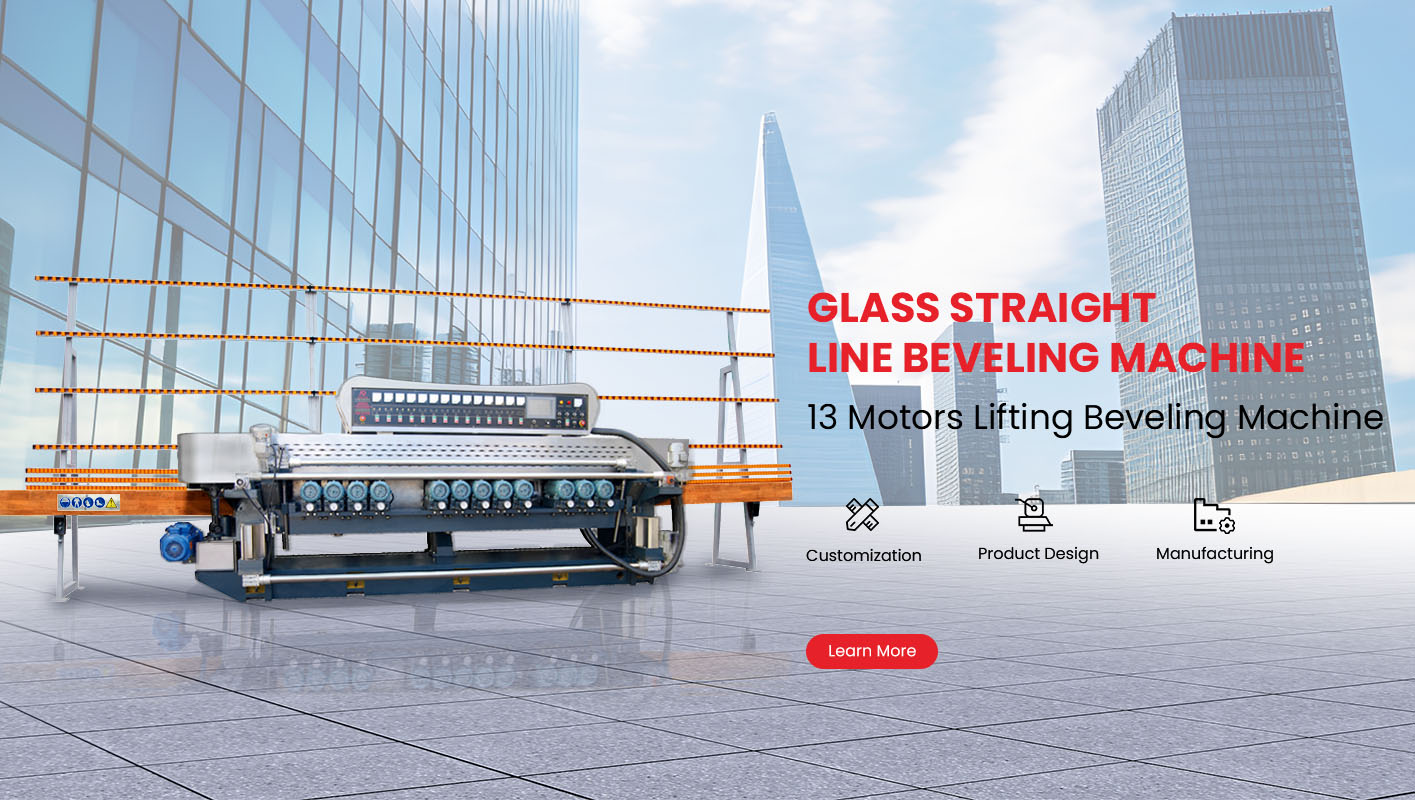
On the product side, ADDTECH’s catalog covers the core processing modules many factories need to build a scalable workflow, including edging, beveling, drilling, washing, breaking, and integrated edging lines. This breadth matters because automation works best when upstream and downstream steps are aligned, and when your supplier can act as a solution provider for line-level matching rather than shipping isolated machines.
To make automation pay back faster, evaluate these points before equipment selection:
Your true bottleneck: edge processing, drilling, washing, or material flow between steps. Automate the constraint first.
Glass mix: thickness range, size range, Low-E handling needs, and surface protection requirements.
Quality definition: what “acceptable” means for edge finish, micro-chipping, and hole quality in your customer specs.
Maintenance readiness: spare parts planning, wear items, and how quickly your team can restore stable performance.
Line compatibility: how each module hands off to the next step, especially if your goal is a future line upgrade.
Automated glass processing equipment is a strategic move toward stability: stable quality, stable delivery, and stable cost control. It reduces the operational risks that quietly drain profitability, such as rework, schedule instability, and safety exposure. With ADDTECH’s established manufacturing footprint, certification basis, patent-backed engineering focus, and full-category product coverage, you can approach automation as a scalable production system rather than a single equipment purchase.