


Clean glass is the starting point for stable deep processing. A glass washing machine removes dust, grinding residue, oil marks, fingerprints, and water-soluble contaminants from glass surfaces before the next production step.
Reliable output from a glass edging line rarely depends on one big repair. It usually comes from small maintenance actions done at the right time, in the right order, and with the right records. For buyers comparing equipment for long-term production, maintenance is not only a workshop issue.
Modern glass factories do not compete on cutting alone. They compete on finish quality, dimensional consistency, labor efficiency, and the ability to move large volumes without creating bottlenecks. That is where a double edging machine becomes important.
Glass edging should improve safety, appearance, and downstream assembly quality. Yet in real production, breakage can appear exactly at the stage that is supposed to stabilize the panel. When factories review the root cause, they often find that the fracture did not start at the machine alone.
Glass edge quality shapes both product value and downstream reliability. A bright, uniform edge makes architectural glass, mirrors, furniture glass, and appliance panels look more premium, but appearance is only one part of the story.
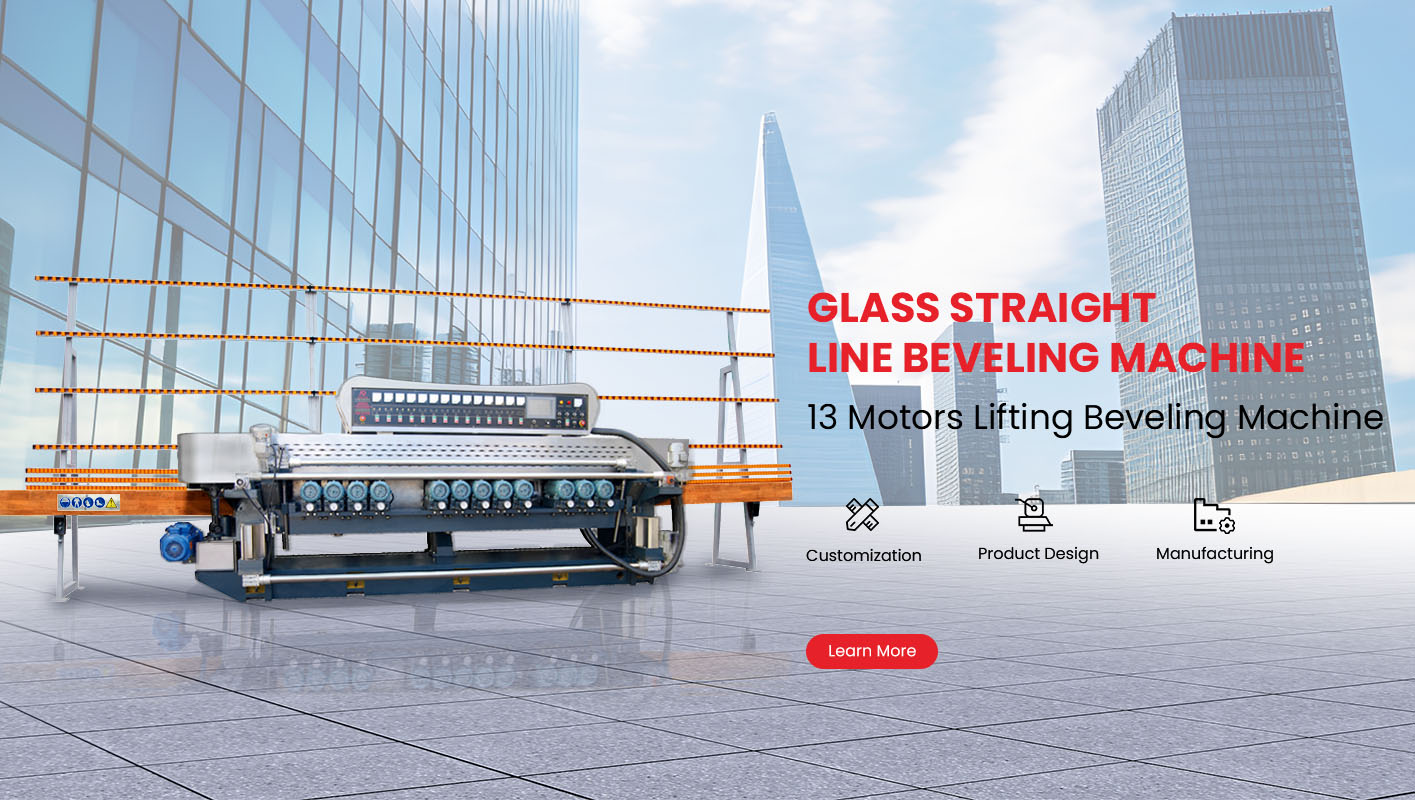
Selecting the right spindle number is one of the most important decisions when buying a glass straight-line edger. The spindle layout determines how much work can be completed in a single pass, how stable the edge quality will be, and how well the machine matches your glass thickness, production speed, and finishing target.
In glass processing, bevelling and standard edge grinding are often mentioned together, but they solve different production tasks. Standard edge grinding mainly removes sharpness, chips, and edge defects so the sheet can move safely into the next stage.
Manual bevel finishing can produce beautiful results, but it depends heavily on operator skill, stable hand pressure, and consistent abrasive management. As glass fabrication orders move toward tighter tolerances and faster delivery, many plants are asking whether automated beveling can truly replace manual work, or only reduce it.
Glass is no longer a simple sheet material. In buildings, transportation, and interior projects, it is specified for safety performance, edge finish, optical clarity, and coating protection. That shift is one reason the flat glass market is measured in the hundreds of billions of dollars, with continued growth projected through 2030.
Drilling clean holes in glass is less about force and more about controlling stress. Cracks usually start from micro chips at the entry edge, local overheating, or vibration that turns a small defect into a running fracture. A stable process combines correct glass selection...
Choosing between a glass straight line edging machine and a double edging machine is less about which one is better and more about which one matches your product mix, takt time, and tolerance targets. Straight line edging focuses on one edge per pass, giving strong flexibility for mixed sizes and frequent changeovers.
The 34th China International Glass Industry Technology Expo, a premier event in the global glass processing industry, concluded successfully at the Beijing International Exhibition Center (Shunyi Hall) from May 26 to 29, 2025. ADDTECH GLASS MACHINERY CO., LTD, a leading manufacturer of high-precision glass processing equipment, made a remarkable presence at the expo, showcasing its latest innovations and technological advancements at booth W3-206.